
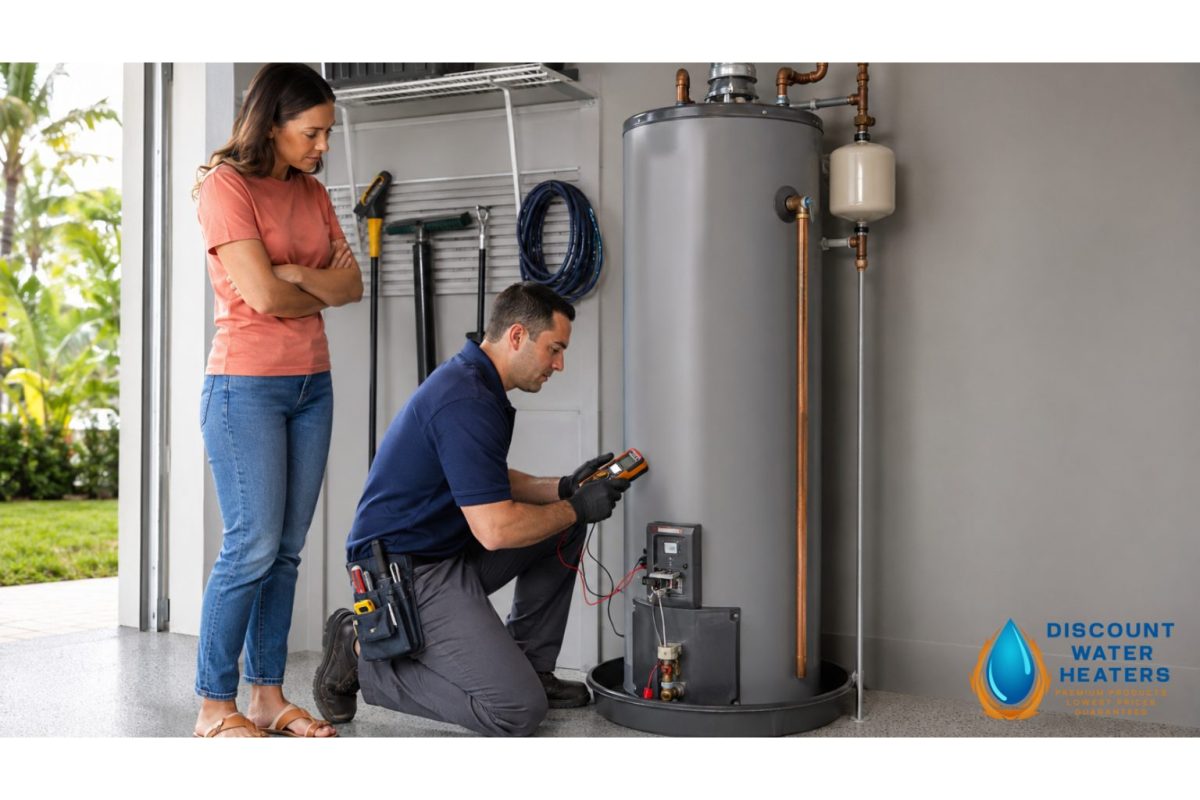
Start by defining the problem
No hot water can mean several different things. Every fixture may be completely cold, one shower may be affected, the water may start hot and turn cold quickly, or the heater may show an error code. Those patterns point in different directions. Before touching the equipment, confirm what changed and whether the problem affects the entire home.
Water heaters combine electricity or fuel, high temperature, water pressure, and sometimes combustion venting. Safe troubleshooting should stay at the level of observation, household controls, and manufacturer-approved checks. Do not remove electrical covers, bypass safety devices, disassemble gas components, or keep resetting equipment that repeatedly shuts down.
First: check for an urgent safety condition
If you smell gas, hear escaping gas, see smoke, find scorching, observe an active leak near electrical equipment, or suspect carbon monoxide, leave the area and follow the gas utility or emergency-service instructions from a safe location. Do not operate switches or attempt to relight the heater.
If water is actively leaking, keep people away from wet electrical areas. If it is safe and you know the correct valve, close the water supply and follow the manufacturer’s shutdown procedure. Never cap or plug a temperature-and-pressure relief valve.
Does every fixture have no hot water?
Test more than one faucet. If only one fixture is affected, the problem may be the faucet cartridge, mixing valve, shower control, local pipe, or anti-scald setting rather than the water heater. If every hot tap is cold, focus on the heater, energy supply, controls, and household demand.
Also ask whether the problem appeared suddenly or gradually. A sudden total loss may involve power, fuel, ignition, a control lockout, or a failed component. Gradually shorter showers may point to sediment, a failed element, capacity, temperature setting, or increased demand.
Confirm the heater type
Identify whether the unit is a gas or electric tank, gas or electric tankless, heat-pump water heater, or another system. Locate the model number and owner’s manual. The correct checks and reset procedure vary; advice for one type can be unsafe or irrelevant for another.
Look for a display, status light, or diagnostic code without opening panels. Photograph the code and label so a technician can identify the model and condition. Do not erase useful diagnostic information through repeated resets.
Safe first checks for an electric water heater
Check the home’s electrical panel for a labeled water-heater breaker. If it has tripped, follow the manufacturer’s instructions and your electrical-panel safety practices. A breaker that trips again indicates a problem that needs professional diagnosis; do not keep resetting it.
A failed heating element, thermostat, wiring problem, or high-limit trip can also cause no hot water or limited hot water. These components involve high voltage. A.O. Smith’s no-hot-water guidance warns homeowners to turn off power before touching equipment and to call a licensed professional when they are not comfortable with the work.
Safe first checks for a gas water heater
Confirm whether other gas appliances are operating and whether the utility has reported an interruption. Observe the water heater’s status light or display and compare it with the owner’s manual. Some modern units use electronic ignition rather than a standing pilot.
Do not remove sealed combustion panels, adjust gas controls beyond manufacturer instructions, or attempt repeated ignition if the unit locks out. If you smell gas at any point, stop, leave, and contact the gas utility or emergency services from a safe place.
What to check on a tankless water heater
A tankless unit may stop heating because of an error code, insufficient flow, power interruption, gas-supply issue, ignition problem, venting fault, scale, clogged inlet screen, or demand beyond the unit’s capacity. Note the code, check whether power is available, and confirm that the problem occurs at multiple fixtures.
Reduce simultaneous hot-water demand and test one fixture. If one low-flow faucet does not trigger the unit but another does, flow may be part of the diagnosis. Cleaning internal components, servicing gas controls, or correcting venting should be handled according to the manual by a qualified technician.
Hot water runs out too quickly
If the water starts hot, the heater is producing heat. The issue may be a failed lower element in an electric tank, sediment, a damaged dip tube, thermostat problem, mixing valve, undersized capacity, changed household demand, or insufficient recovery time.
Note how long the hot water lasts, how many fixtures are running, whether the pattern is new, and how long recovery takes. That information is more useful than simply reporting “no hot water.”
Water is lukewarm instead of hot
Lukewarm water can result from a thermostat or element problem, mixing valve, crossover between hot and cold plumbing, scale, control setting, or high demand. Do not solve the problem by turning the temperature excessively high. Higher settings increase scald risk and may mask the failure.
Check whether the temperature problem affects all fixtures and whether a recent plumbing repair, new appliance, or valve change occurred. A professional can measure temperature and isolate the equipment from plumbing-side causes.
Look for leaks, corrosion, or unusual sounds
Water at the base of the tank, active relief-valve discharge, rust near fittings, rumbling, popping, or repeated shutdowns changes the priority. A connection may be repairable, but leakage through a corroded tank shell generally requires replacement.
Do not tighten severely corroded fittings or disturb a leaking tank without understanding the risk. If the unit shows multiple warning signs, compare the repair with Discount Water Heaters’ replacement guidance rather than evaluating the no-hot-water symptom alone.
Common causes a technician may find
Electric tank systems may have failed elements, thermostats, wiring, or controls. Gas tanks may have ignition, burner, gas-control, combustion-air, venting, or thermocouple-related problems depending on the design. Tankless systems may have scale, sensors, flow detection, ignition, venting, fuel, or control faults. Heat-pump models add fan, compressor, refrigerant, filter, and ambient-condition considerations.
A correct diagnosis should explain the failed component, why it failed when known, the repair scope, warranty, safety implications, and whether the tank or system is otherwise sound.
When to call for water-heater repair
Call when the breaker trips repeatedly, a code persists, the burner will not operate, the tank leaks, the relief valve discharges, temperature is unsafe, or the manufacturer’s safe reset does not restore service.
Discount Water Heaters’ repair team can diagnose tank and tankless systems. Have the model, serial number, code, age, fuel type, photos, and symptom history ready.
Consider the rest of the home
Keep a simple mechanical-systems calendar with the water heater’s age, maintenance, and visible leak checks. For cooling upkeep, One Hour’s Club Membership information can help coordinate recurring professional service.
The bottom line
When there is no hot water, protect people, check whether every fixture is affected, identify the heater type, note any code, and use only manufacturer-approved household controls. Stop for gas odor, water near electricity, repeated breaker trips, tank leakage, pressure discharge, or unfamiliar procedures.
A few observations can speed diagnosis without turning a homeowner into a technician. Identify the pattern, avoid increasing the danger, and arrange the right repair.
Frequently asked questions
What is the first thing to check when there is no hot water?
Confirm whether all fixtures are affected and identify the heater type. Then check for safety hazards, status lights or codes, and the appropriate household power or fuel condition without opening the unit.
Can I reset my water heater?
Use only the procedure in the model’s owner manual. If the unit trips or locks out again, stop resetting it and have the cause diagnosed.
Why do I have hot water in one faucet but not another?
A single-fixture problem often involves the faucet, shower cartridge, local mixing or anti-scald control, or piping rather than the heater.
Does no hot water mean I need a new heater?
Not necessarily. Power, controls, elements, ignition, sensors, and other repairable parts can cause the symptom. A leaking tank, advanced corrosion, age, repeated failures, and repair cost make replacement more likely.
Related Resources for Florida Homeowners: How to Reset an Electric Water Heater and How to Relight a Gas Water Heater Pilot Light.