
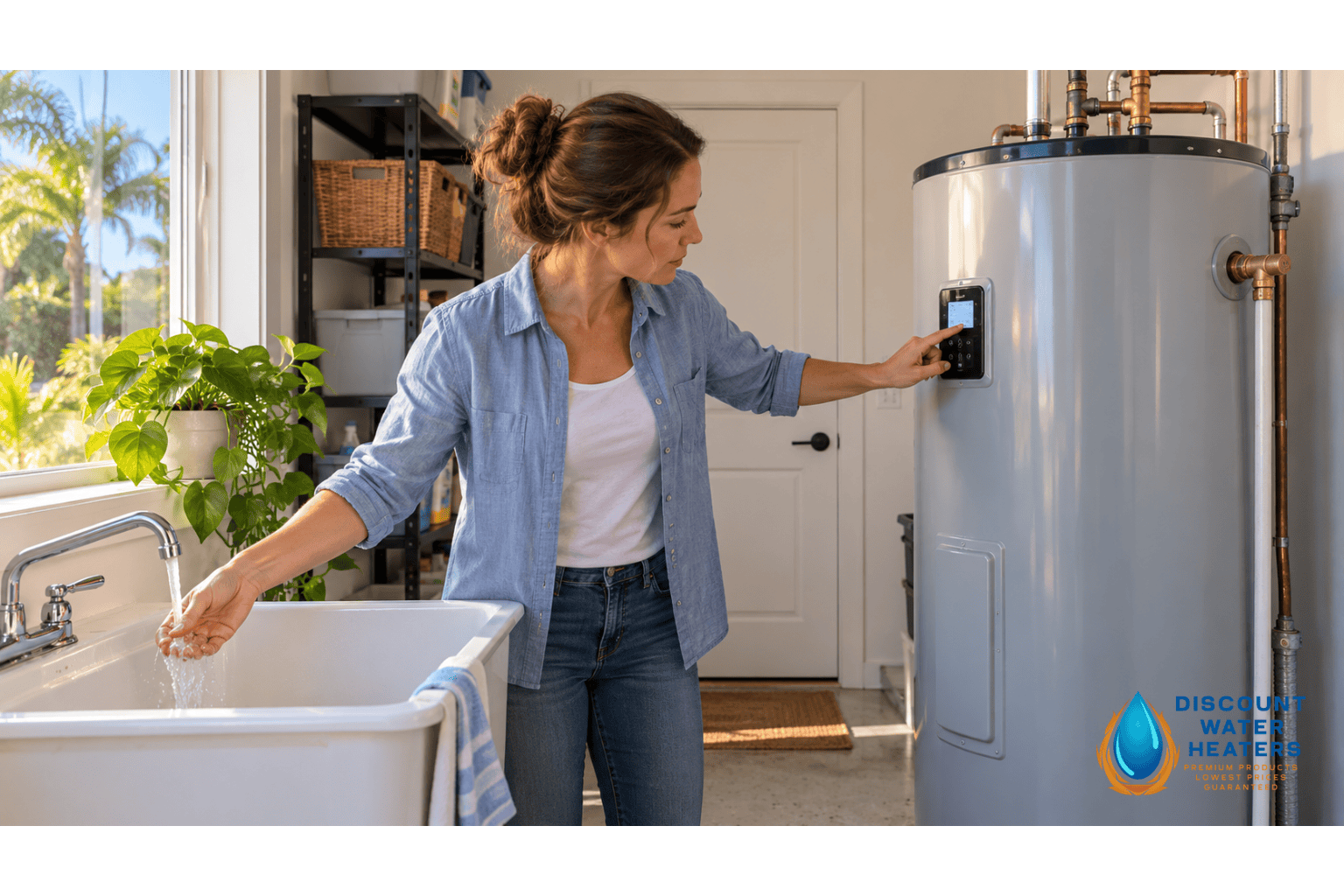
Start with safety, not a screwdriver
No hot water can result from a tripped power source, interrupted fuel, a control setting, unusual household demand, or an equipment failure. Homeowners can make several useful observations, but a water heater combines heat, pressure, electricity, and sometimes combustible gas. Do not remove service panels, touch wiring, defeat a safety device, or disassemble fuel components.
If you smell gas, hear active leaking near fuel piping, see smoke, or have a carbon-monoxide alarm, leave the area and contact the gas utility or emergency services from a safe location. The Consumer Product Safety Commission recommends working carbon-monoxide alarms and professional attention to fuel-burning appliances.
Check whether the problem affects one fixture or the whole home
Try hot water at two or three fixtures, allowing normal travel time from the heater. If one faucet or shower is affected while others are hot, the problem may involve that fixture’s valve, cartridge, or mixing control rather than the water heater. If every fixture stays cold, continue with whole-system observations.
Notice whether the water is completely cold, briefly warm, or warm but not hot enough. Record when the problem began and whether it followed a power outage, plumbing work, guests, or unusually heavy use. These details help a technician narrow the diagnosis.
Confirm that the home has water and normal flow
Make sure both hot and cold fixtures have normal flow. A broader water interruption, closed main valve, or plumbing problem can mimic equipment failure. Do not operate a water heater that may be empty or has been isolated from its water supply; heating an unfilled tank can damage components and create a hazard.
Look around the unit without moving it. Standing water, active dripping, corrosion trails, a bulging tank, or water from the temperature-and-pressure relief piping requires professional evaluation. Keep people away from leaking electrical equipment.
For an electric unit, inspect the breaker safely
At the home’s electrical panel, identify the labeled water-heater breaker. If it is clearly tripped, turn it fully off and then on once, provided the area and equipment are dry and there is no burning odor, buzzing, or visible damage. If it trips again, leave it off and call a qualified professional. Repeated resets can conceal a dangerous fault.
Do not open the water heater’s access panels or test internal voltage unless you are qualified. The Department of Energy provides general water-heating guidance, but model-specific electrical diagnosis belongs with the manufacturer instructions and a trained technician.
For a gas unit, observe without altering fuel components
Confirm whether other gas appliances are operating only if doing so is normal and safe. Look at the water heater’s external status light or display and note any code. Do not loosen fittings, bypass controls, or improvise a lighting procedure. Follow the exact manual for the model; newer units and older standing-pilot systems operate differently.
If the manufacturer permits a user lighting procedure, follow only those printed steps and stop immediately if gas odor is present. When the manual is missing, use the model and serial number to locate the official version. A manufacturer’s troubleshooting resource, such as the Rheem support tools, can help interpret a display without exposing internal components.
Review settings, schedules, and demand
Check the external temperature setting or operating mode without removing a cover. Vacation mode, energy-saver schedules, demand-response settings, or a control changed after an outage may reduce output. Avoid raising temperature aggressively; excessively hot water increases scald risk.
Think about recent use. Back-to-back showers, laundry, dishwashing, guests, or a large tub can temporarily exhaust a storage tank. Allow the normal recovery period listed in the manual. If shortages occur repeatedly under ordinary demand, the unit may be undersized, losing capacity, or malfunctioning.
Read the display and gather model information
Photograph any error code, status light pattern, temperature setting, label, and visible leak. Record the model, serial number, approximate installation age, fuel type, and what happened before the failure. Do not clear a code repeatedly before documenting it.
This information lets Discount Water Heaters prepare for the correct equipment and possible parts before a visit. It also helps determine whether warranty coverage, a repair, or a replacement discussion is appropriate.
Know which symptoms require a technician now
Call promptly for an active tank leak, repeated breaker trip, burning smell, scorched wiring, gas odor, combustion concern, relief-valve discharge, damaged venting, unusual popping with poor performance, or a recurring error. Stop using the unit when the manufacturer or a safety condition indicates shutdown.
If the problem appears connected to a wider electrical or home-comfort issue after an outage, One Hour Air Conditioning and Heating of the Treasure Coast can help evaluate related systems. Keep the diagnosis within the appropriate licensed trade.
Prepare for the service call
Clear a safe path to the equipment, secure pets, and locate warranty and service records. Tell the technician about recent plumbing, electrical, or gas work. Ask for the diagnosis, repair scope, price, warranty, and expected remaining life before authorizing nonemergency work.
A few careful observations can save time, but they should never become an unsafe repair attempt. The goal is to identify a simple external cause, document the symptoms, and recognize when professional service is the responsible next step.
Avoid common troubleshooting mistakes
Do not assume that a reset fixed the cause, increase temperature to compensate for failing performance, plug equipment into an improvised power source, or use an online video for a different model. Never cap a relief discharge, block combustion air, or reconnect venting with temporary materials. Avoid draining a tank unless the manufacturer procedure, safe termination, and local conditions are understood; hot water can cause severe burns. If a repair requires a cover, meter, gas fitting, burner part, vent component, or pressure control, stop at observation and arrange qualified service. Accurate symptoms are more valuable than a risky partial repair.
Keep children and pets away from the equipment while the problem is being evaluated.
Frequently asked questions
Why did my hot water stop after a power outage?
A breaker, control, schedule, or error state may have changed. Check only external controls and the breaker once, then use the model manual or a technician.
Can I keep resetting the water-heater breaker?
No. A second trip can indicate an electrical fault. Leave it off and arrange qualified service.
How long should I wait for hot water to recover?
Recovery varies by tank size, fuel, elements or burner, incoming temperature, and operating mode. Use the manufacturer’s specifications for the exact model.