
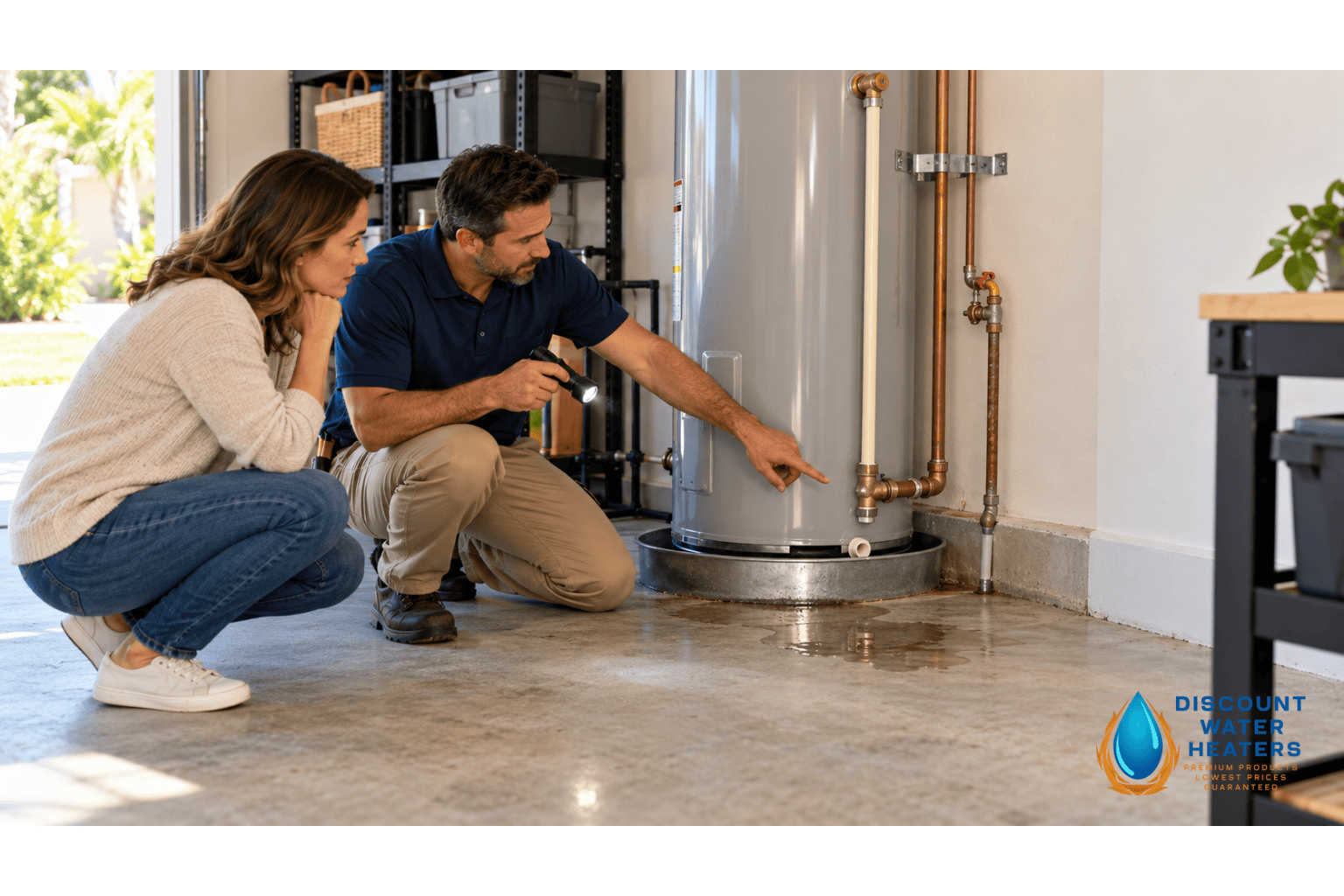
Treat unexplained water as a warning until the source is clear
Water around a water heater may come from the tank, a plumbing connection, a relief or drain line, condensation, a nearby appliance, or water traveling across the floor. The correct response depends on the source, amount, equipment type, and whether electricity, gas, or hot water creates an immediate hazard.
Do not step into standing water near electrical equipment. If you smell gas, see smoke, hear arcing, observe a bulging tank, or have a carbon-monoxide alarm, leave the area and contact the utility or emergency service from a safe location. Do not continue checking.
Start with distance and documentation
Keep children and pets away and photograph the area before wiping anything. Note when the water appeared, whether the heater was running, recent hot-water use, weather, plumbing or HVAC service, and whether the puddle is growing. A timeline helps separate a one-time spill from an active leak.
Record the model, serial number, fuel type, approximate age, and any external error code. Do not move the heater, remove a panel, touch wiring, loosen a fitting, operate a relief valve, or block a discharge line to find the source.
Confirm the water is not from a nearby source
Look for a washing machine, utility sink, softener, filter, refrigerator line, drain, window, roof penetration, or plumbing pipe near the heater. Water can follow a wall, pipe, platform, or floor slope and collect beneath equipment that is not leaking.
Air-conditioning condensate can also travel into a utility area. If the moisture appears during cooling operation or near an HVAC drain, One Hour Air Conditioning and Heating of the Treasure Coast can evaluate the cooling-system source. Avoid assuming every nearby puddle came from the tank.
Use a dry-paper check only when the area is safe
If there is no electrical, gas, scalding, or structural warning, dry the accessible floor around the unit without reaching under equipment. Place separate pieces of dry paper towel on the floor near visible external areas, then watch from a safe distance to see where moisture appears first.
This is an observation, not a repair. Do not wrap paper around hot venting, valves, electrical components, or concealed connections. If water returns quickly or the source remains unclear, stop and arrange professional service.
Check visible plumbing connections
From a safe position, look at the exposed hot- and cold-water piping above or beside the heater. Moisture may form at a threaded fitting, flexible connector, shutoff valve, expansion tank connection, or nearby joint and run down the outside of the unit.
Use a flashlight without touching the connection. Look for a bead of water, mineral trail, rust streak, or wet insulation. A connection leak may be repairable, but tightening a fitting without isolating pressure and understanding the material can worsen damage.
Observe the temperature and pressure relief discharge
Storage water heaters have a temperature and pressure relief system intended to reduce dangerous conditions. If water is coming from the relief valve or its discharge pipe, do not cap, plug, kink, reduce, or block the line. Do not repeatedly operate the valve as a test.
Discharge may relate to temperature, pressure, thermal expansion, debris, or a valve problem. Because the water can be very hot and the cause involves a safety control, keep clear and have a qualified professional diagnose it.
Look at the drain valve area
The drain valve is usually near the lower portion of a storage tank. Water may appear there after service, from a loose or damaged component, or from another leak traveling downward. Observe without attaching a hose, turning the valve, or removing a cap.
A small drip can spread across a smooth floor and resemble a tank failure. Photograph the first visible wet point. If the valve or surrounding tank is corroded, do not manipulate it because movement can increase the leak.
Consider normal condensation carefully
Some equipment and nearby cold piping can collect condensation under certain operating and humidity conditions. A heat-pump water heater also removes moisture from surrounding air and uses a condensate drain. Condensation should follow the equipment’s designed drainage path.
Do not assume repeated pooling is normal. A blocked, disconnected, or poorly routed condensate line can cause damage, and a tank leak can be mistaken for condensation. Use the exact manufacturer manual to identify normal drains and operating patterns.
Inspect the drain pan and visible tank exterior
A drain pan may catch leakage, but it does not identify the cause. Check whether water is entering the pan from above, appearing at the tank base, or backing up because the pan drain is obstructed. Do not reach beneath the heater or disturb the pan.
Water emerging from the tank body, a seam, or the base can indicate internal tank failure. Rust, swelling, persistent seepage, and repeated pan filling require prompt evaluation. A leaking storage tank generally cannot be repaired like an external fitting.
For tankless and heat-pump models
Tankless units can leak at water connections, internal components, condensate systems, or service valves. Heat-pump models add condensate tubing and may have air filters and operating modes. External error codes and visible drain paths are useful, but covers should remain closed.
Different models have different shutdown and isolation instructions. Follow only the manual for the exact unit. If the leak is active or near electricity or gas, do not experiment with controls while standing in a wet area.
Limit damage without adding risk
If the manufacturer instructions and conditions allow a safe shutdown from a dry location, follow them exactly. Do not guess which valve, breaker, or gas control applies. Move belongings away only when the path is dry and safe, and avoid using hot water until the condition is assessed.
Contact Discount Water Heaters with the photos, equipment information, leak location, and timeline. Ask whether the situation requires emergency service and what safe steps apply to that model before the technician arrives.
Prepare for repair or replacement decisions
Request a diagnosis that identifies the actual source. Compare repair scope, total cost, warranty, tank condition, age, efficiency, code requirements, and expected remaining life. An external connection may justify repair, while a leaking tank often changes the decision.
The goal of a homeowner check is to provide useful observations, not to open or rebuild the equipment. Early documentation and a safe response can reduce damage while preserving the evidence a qualified technician needs.
Frequently asked questions
Is a small puddle under a water heater an emergency?
It can become one. Keep clear of electrical or gas hazards, document whether it is growing, and arrange prompt diagnosis rather than assuming it will stop.
Can I plug a dripping relief pipe temporarily?
No. Never block a temperature and pressure relief discharge. Keep away from hot water and have the cause evaluated.
Does water at the tank base always mean the tank failed?
No. Water can travel from connections, valves, drains, condensation, or nearby sources. A professional should confirm the first point of leakage.