
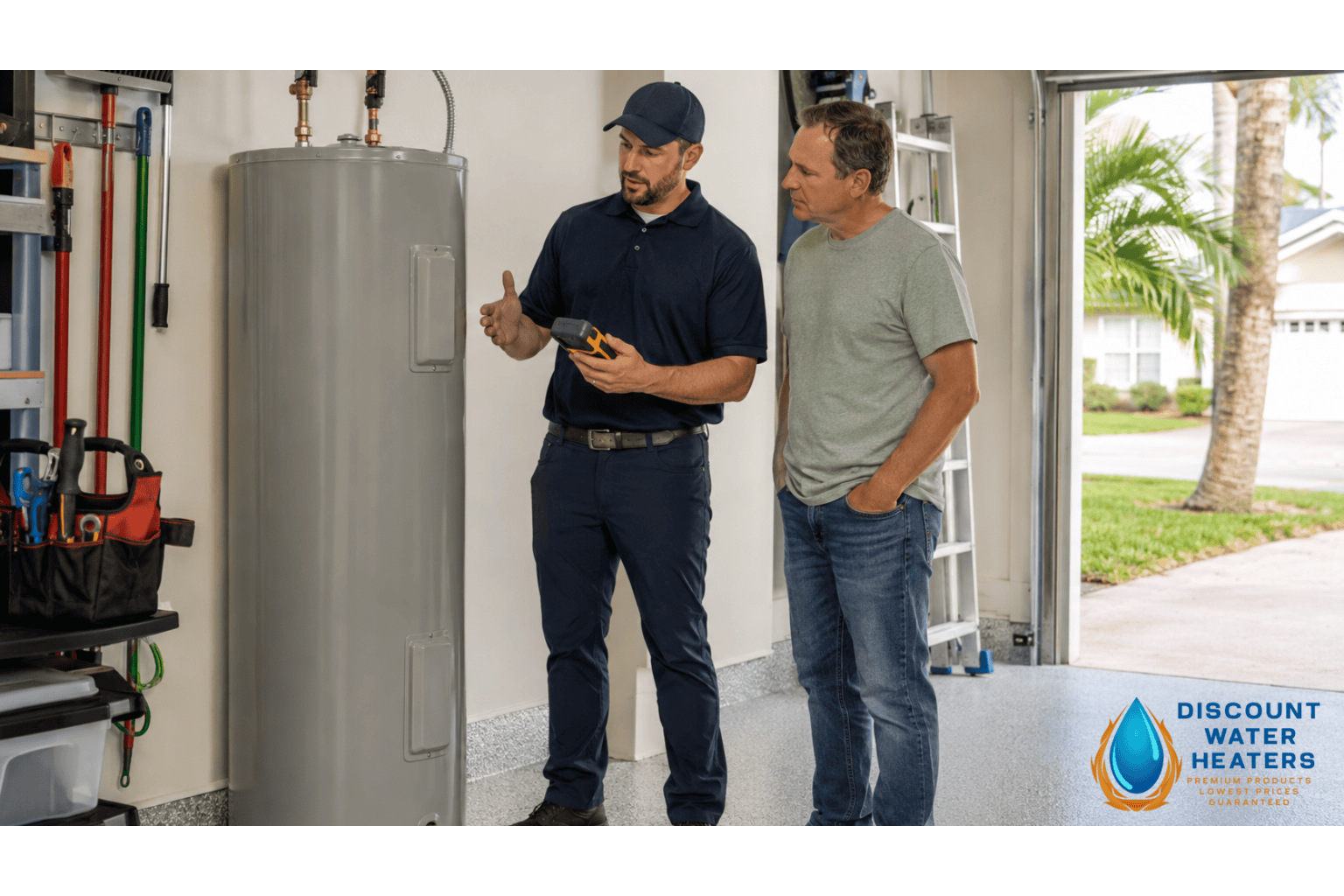
The right answer starts with the exact failure
When hot water disappears or water appears near the heater, homeowners want a fast answer: repair or replace the water heater? A small, isolated component failure on a sound system may justify repair. A leaking tank, unsafe condition, or major failure on an aging unit may make replacement the responsible choice. Age matters, but it should not be the only fact.
A useful recommendation considers where the water is coming from, what failed, tank condition, repair history, fuel type, warranty, capacity, efficiency, parts availability, installation quality, and how long you expect to remain in the home. Ask for measured findings and a written scope before comparing prices.
First: distinguish an emergency from an inconvenience
Water near electrical equipment, a strong gas odor, smoke, sparking, signs of combustion trouble, or a rapidly leaking tank requires immediate safe action. Do not stand in water near energized equipment, operate damaged controls, or keep relighting a unit that will not stay lit. Leave the area and contact the appropriate emergency or utility service when gas is suspected.
For an active water leak, shut off the water supply if you can do so safely and protect nearby property. Turn off the energy source only when you know the correct safe procedure. A professional can identify whether the leak comes from a connection, valve, drain, pipe, condensation, or the tank itself.
When a repair may make sense
Repair is often reasonable when the tank is sound, the unit is not near the end of its expected service range, the failure is limited, the required part is available, and there is no pattern of recurring problems. Examples can include certain thermostats, heating elements, igniters, controls, valves, supply connections, or other replaceable components.
The diagnosis must fit the equipment and fuel type. Ask what failed, why it failed, whether the repair addresses the cause, what warranty applies to the work, and whether another known condition is likely to create a near-term expense.
When replacement is usually the better choice
A storage tank that is leaking from the tank body generally cannot be repaired reliably; the tank must be replaced. The U.S. Department of Energy notes that a leaking water-heater tank needs replacement. Extensive corrosion, an unsafe or uncorrectable installation, unavailable major parts, or repeated costly failures can also shift the decision.
Replacement may also make sense when a major repair approaches a meaningful share of installed replacement cost and the existing unit is already old, inefficient, poorly sized, or out of warranty. Do not apply a universal percentage without considering the specific heater and installation.
Age is evidence, not a verdict
Two heaters installed in the same year can age differently. Water quality, temperature setting, maintenance, household demand, installation, environment, and manufacturing all influence condition. A well-maintained unit may remain serviceable, while a younger system exposed to corrosion or poor installation may fail early.
Find the model and serial number without removing safety covers. The manufacturer or a professional can help identify the production date and warranty. Combine age with current condition and repair history rather than replacing equipment solely because it crossed a calendar threshold.
Look carefully at the source of a leak
Not every puddle means the tank failed. Water may come from a loose connection, temperature-and-pressure relief discharge, drain valve, condensate line, nearby plumbing, or another appliance. Condensation can also occur under some operating conditions. The source determines whether repair is possible and whether a safety issue is present.
Never cap or plug a relief valve to stop water. A professional should determine why it discharged and verify the valve, temperature, pressure, expansion control, and installation. A leaking tank seam or tank body points toward replacement.
Compare repair history and expected next costs
One inexpensive repair does not mean the heater is unreliable. Several failures in a short period suggest a pattern. Add the cost already spent, the proposed repair, and likely near-term items. Consider whether previous work carried a warranty and whether the new repair meaningfully extends useful service.
Ask the technician to separate required work from optional improvements. If replacement is recommended, request a repair alternative when one is safe and realistic. If repair is recommended, ask what condition would change that advice.
Efficiency can influence the decision
Water heating can be a significant household energy use. An older heater may have greater standby loss or declining performance, but a new unit’s savings depend on equipment type, efficiency, fuel prices, household use, temperature setting, and installation. Efficiency alone may not repay an early replacement quickly.
When replacement is already necessary, compare suitable technologies and operating costs. The Department of Energy’s guide to selecting a new water heater recommends choosing equipment that provides enough hot water while operating efficiently and considering type, size, and fuel source.
Capacity and household changes matter
A heater may still operate but no longer fit the household. More occupants, a large tub, new fixtures, or simultaneous demand can expose undersizing. Conversely, replacing a large unit with the same size without reviewing actual demand may waste space or energy.
A contractor should ask about first-hour demand for storage equipment or simultaneous flow and temperature rise for tankless equipment. If you are comparing technologies, review whether tankless is worth the investment alongside the actual installation requirements rather than a generic promise of endless hot water.
Installation conditions can change the economics
The appliance price is only part of replacement. The installed scope may include permits, removal, drain pan, expansion control, shutoffs, venting, combustion air, gas piping, electrical work, condensate management, seismic or wind requirements where applicable, access changes, and code corrections.
A like-for-like replacement may be straightforward. A fuel change, tankless conversion, heat-pump water heater, relocation, or capacity increase may require substantial infrastructure. Request a complete written estimate from Discount Water Heaters’ replacement service.
Use a five-part decision test
-
Is repair safe and technically sound?
If the tank itself is leaking or the condition cannot be corrected safely, replacement is the answer. Do not trade safety for a lower invoice.
-
What is the total repair cost?
Include parts, labor, diagnostic work, and any related correction. Compare it with complete installed replacement, not the retail price of a heater in a box.
-
What condition remains after repair?
A new component does not make the tank, vent, wiring, or other aging parts new. Ask what the technician observed about the remaining system.
-
Does the heater still fit the home?
Evaluate capacity, fuel, location, efficiency, noise, space, and household plans. A necessary replacement is an opportunity to correct a mismatch.
-
How long do you expect to keep the home?
A short remaining stay may favor a safe, sensible repair. A long horizon may make a better-performing replacement more valuable. The decision still begins with safety and condition.
Get a recommendation you can understand
A trustworthy recommendation shows the failure, explains the risk, presents safe options, and provides complete prices. Ask for the model proposed, capacity, efficiency, warranty, permit scope, disposal, code corrections, and expected maintenance. For connected HVAC needs, homeowners can use One Hour Air Conditioning & Heating of the Treasure Coast.
Discount Water Heaters’ repair service can diagnose the problem and help homeowners compare repair value with a correctly scoped replacement.
Frequently asked questions
Can a leaking water-heater tank be repaired?
A leak from a connection or replaceable component may be repairable. A leak from the storage tank body generally requires replacement. Confirm the source professionally.
Is an old water heater automatically unsafe?
No. Age alone does not prove danger, but it raises the importance of condition, installation, maintenance, and repair history. Safety problems require correction regardless of age.
Should I repair a heater that is out of warranty?
Possibly. A minor repair on a sound unit can make sense. Compare cost, condition, expected remaining life, and replacement scope.
Should I switch to tankless when replacing?
Tankless can fit some households, but compare flow capacity, gas or electrical infrastructure, venting, maintenance, installation cost, and expected ownership period.