
The right system depends on the home
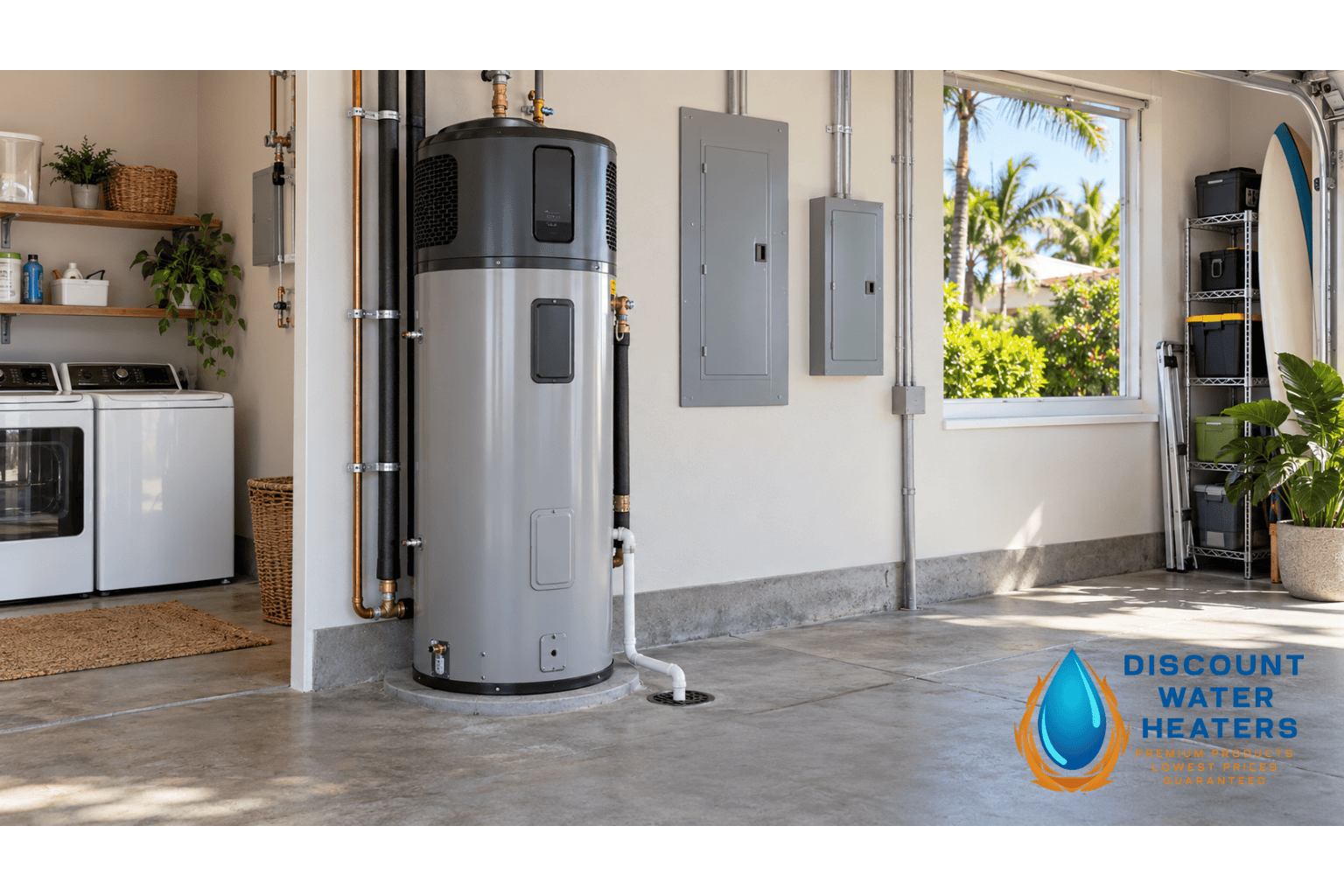
Heat pump water heaters can be an efficient replacement for standard electric resistance tanks. They move heat from surrounding air into stored water, which changes both energy use and the conditions around the unit.
Florida’s warm climate can be favorable, especially in some garages or utility spaces, but climate alone does not determine fit. Air volume, condensate drainage, sound, electrical service, household demand, and location still require evaluation.
Understand how the system works
An integrated heat pump water heater uses a compressor and heat exchanger above or around a tank. Backup resistance elements may support high demand.
The correct answer depends on the actual home, equipment, water quality, utility rates, and household demand. General guidance cannot replace an on-site evaluation.
Evaluate the installation space
The unit needs manufacturer-specified air volume or ducting. A tight closet may require a different design than an open garage.
Request a complete installed price that identifies electrical, gas, venting, drainage, permit, and disposal work. Equipment price alone can be misleading.
Plan condensate drainage
Heat extraction can produce condensate. The drain route, termination, maintenance access, and overflow protection must be designed correctly.
Follow manufacturer instructions and applicable code, and use a qualified professional for installation or safety-related service. Hot water systems combine heat, pressure, electricity, or fuel.
Consider cooling and dehumidification
The unit releases cooler, drier air. That may benefit a garage but be uncomfortable in a small conditioned room.
Keep the model, serial number, warranty, permit, and service history together. Good records make future maintenance and replacement decisions faster.
Size for household demand
Tank volume, first-hour delivery, operating mode, simultaneous use, and recovery all matter. Efficiency should not create recurring hot-water shortages.
Ask how the proposed system will perform during the household’s busiest period, not only under average daily use.
Compare sound and controls
Review rated sound, location near living spaces, schedules, vacation modes, alerts, and which functions remain available without internet.
Confirm access for future inspection and service. A difficult installation can increase maintenance cost for the life of the equipment.
Review cost and maintenance
Compare installed price, local electricity rates, incentives, filter care, anode inspection, warranty, and expected service access.
Compare warranties by covered component, labor terms, registration, maintenance requirements, and exclusions rather than headline duration alone.
A 30 day implementation plan
During the first week, document the current position on understand how the system works, evaluate the installation space, and plan condensate drainage. Gather the records, costs, timing, and feedback that already exist. Do not begin by assuming the answer. Establish a baseline that shows what is working, where the process breaks, and which condition creates the greatest practical risk.
In the second week, assign one person to test an improvement connected with consider cooling and dehumidification and size for household demand. Define the decision that person can make, the people who need to participate, and the evidence that will show progress. Keep the test narrow enough to learn from it without disrupting the entire operation or household plan.
During week three, review the evidence related to compare sound and controls and review cost and maintenance against the original goal. Ask what changed, what remained outside the team’s control, and whether the proposed action created a new cost or risk elsewhere. Record the lesson in plain language so the next decision begins with stronger information instead of another guess.
In the fourth week, choose what to standardize, what to revise, and what to stop. Confirm the owner, schedule, documentation, and next review date. A useful plan does not require every answer in advance; it requires a clear next action, a responsible person, and a way to recognize when new evidence should change the decision.
Common mistakes to avoid
Avoid selecting equipment from a promotional claim or old tank label alone. Do not approve an installation until capacity, utilities, drainage, permits, access, warranty, and maintenance are understood. Slow down when an estimate depends on an assumption that has not been verified. The strongest decision is usually the one that remains sensible after cost, timing, limitations, and future maintenance are considered together.
Connect the decision to the larger ecosystem
ENERGY STAR provides certified-product guidance. Florida homeowners can ask Discount Water Heaters to evaluate the actual site, while One Hour Air Conditioning and Heating can help with related home-comfort questions.
A practical final review
Before approving the project, ask for the selected model, capacity basis, complete scope, installed price, permit responsibility, warranty terms, maintenance needs, and expected operating behavior in writing. Confirm that the home’s electrical, gas, venting, drainage, space, and access conditions support the proposal without relying on an unpriced future change.
Recheck the assumptions behind understand how the system works, evaluate the installation space, and plan condensate drainage. Use the documents, measurements, local conditions, and direct conversations described above rather than relying on memory or a general rule. Then review how consider cooling and dehumidification and size for household demand affect cost, timing, safety, or performance. A decision is ready only when those tradeoffs are visible and the responsible person understands the next action.
Finally, decide how compare sound and controls and review cost and maintenance will be monitored after the initial choice. Set a realistic review date and identify the evidence that would justify continuing, adjusting, or stopping the plan. Keep the rationale with the relevant records so a future employee, adviser, technician, or household member can understand why the decision was made and what conditions would change it.
A reliable installation is more valuable than a feature list that the home cannot support. Before approving work, confirm the diagnosis, scope, warranty, expected maintenance, and any changes required elsewhere in the home. Sizing should reflect simultaneous use and recovery needs rather than simply copying the old equipment label. Efficiency estimates depend on local rates, operating mode, installation quality, household behavior, and the condition of connected systems. Never defeat a safety device or attempt gas, combustion, pressure, or electrical work beyond your qualifications. Plan replacement before a leaking tank turns a considered purchase into an emergency. Put the conclusions about understand how the system works and consider cooling and dehumidification beside the evidence for compare sound and controls; the combined view is more reliable than judging any one factor in isolation.
Frequently asked questions
Do heat pump water heaters work in Florida garages
They can work well in suitable garages, but airflow, drainage, electrical service, sound, capacity, and manufacturer limits must be checked.
Will the garage become cold
The unit releases cooler air while operating. The effect depends on space size, ventilation, run time, and season.
Do they need maintenance
Yes. Follow manufacturer instructions for filters, condensate, tank components, inspection, and service.