
Emergency Water Heater Failure: Your Backup Plan and What to Do Right Now
It’s 11 PM on a Tuesday, and you step into the shower to find nothing but ice-cold water. Or you walk into your utility room and spot a puddle spreading across the floor. A water heater failure doesn’t announce itself during business hours, it happens when you’re least prepared to handle it. If you’re a Treasure Coast homeowner facing this scenario right now, you need to know what to do in the next 15 minutes, how to stay functional without hot water, and whether you’re looking at a quick repair or a full replacement.
This guide walks you through the emergency response, helps you diagnose what’s actually wrong, and and gives you the clarity to make a decision under pressure.
In our experience working with Treasure Coast homeowners, water heater failures follow predictable patterns. The households that handle them best are those who take three immediate actions, shutting off power, closing the water inlet, and documenting symptoms, before calling for help. These steps prevent cascading damage and give a technician the diagnostic detail needed to determine whether you’re looking at an hour-long repair or an overnight replacement.
When Your Water Heater Fails: What to Do in the First 15 Minutes
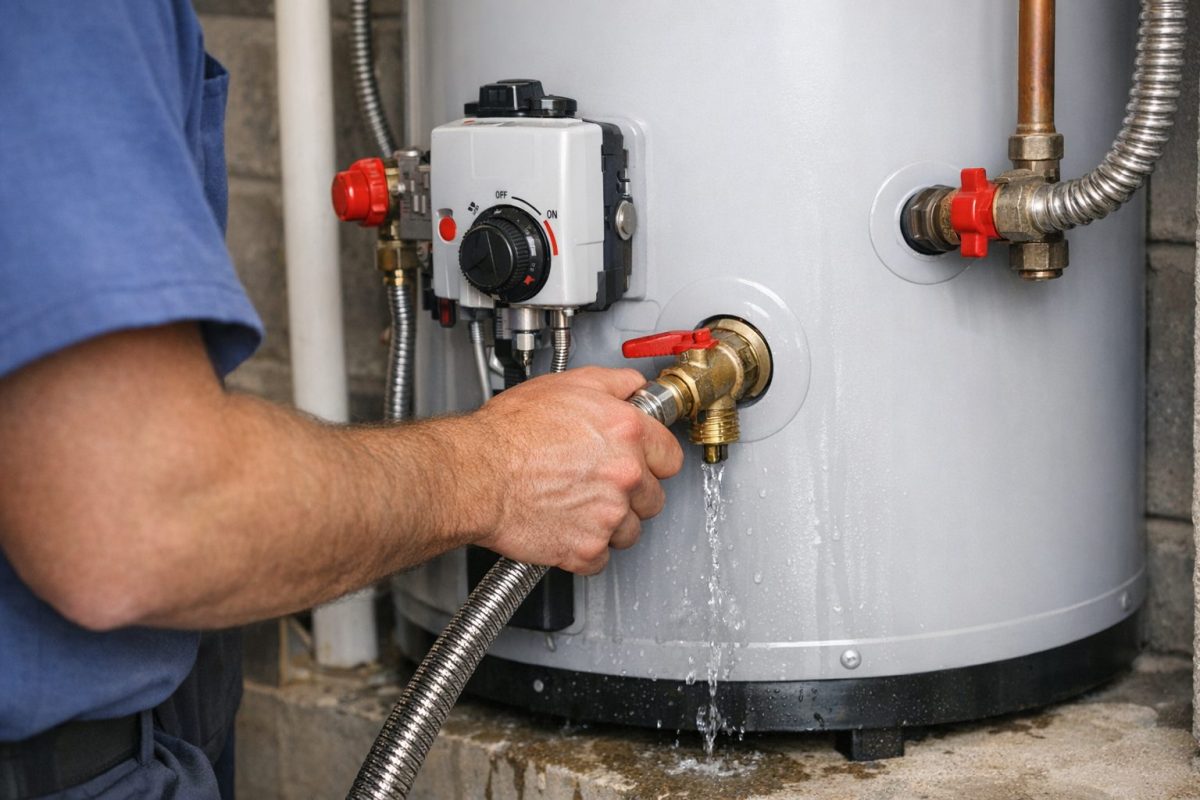
The moment you realize your water heater is in trouble, your first instinct might be to call someone. Before you do, take three specific actions to prevent further damage and ensure safety.
Turn off the power supply immediately. For gas units, locate the gas valve on the side of the tank and turn it to the “Off” position. For electric units, switch off the circuit breaker dedicated to the water heater, your breaker panel should be labeled, but if you’re unsure which breaker controls it, flip the one marked “water heater” or test by cutting power and checking if the unit stops heating. This step prevents additional stress on a failing system and stops gas flow if there’s a leak.
Shut off the cold water inlet valve. Find the valve on the cold water line coming into the top of the tank, it usually looks like a small wheel or lever handle. Turn it clockwise (wheel valves) or perpendicular to the pipe (lever valves). This stops water from continuing to flow into a tank that’s leaking or malfunctioning, and it buys you time before water damage spreads.
Document what you see. Before you call for help, note the specific signs: Is water pooling around the base? Do you smell sulfur, rotten eggs, or gas? Is the water coming out of your taps discolored, brown, rust-colored, or cloudy? Are you hearing banging, rumbling, or hissing sounds from the tank? These details matter enormously for diagnosis. When you describe the problem to a technician, you’re giving them the clues they need to determine whether this is fixable in an hour or requires a full replacement by morning.
Do not attempt to restart. If you see active leaking, hear loud banging, or notice heavy corrosion on the tank surface, don’t try to turn the unit back on to test it. A malfunctioning water heater under pressure can fail more catastrophically, and you risk injury.
How to Diagnose Your Water Heater Emergency
The type of failure you’re experiencing points directly to whether you need a repair or replacement, and getting this right saves you both time and money during a crisis.
No hot water, but the unit isn’t leaking. This usually points to a heating element (electric units) or pilot light and thermocouple (gas units) that have failed. These are repairable components, and if the tank itself is structurally sound, a technician can often restore function within hours. Ask yourself: Is the unit making any unusual noises? Is there visible corrosion on the tank? If the answer is no, repair is likely your path.
Water pooling around the base. This is the scenario where diagnosis becomes critical. A small leak from a loose connection or failed valve can be repaired. A leak coming from the tank body itself almost always means replacement, the tank has corroded from the inside, and patching it is temporary at best. Take Sarah M., a homeowner in Stuart, who noticed a drip under her tank on a Monday morning. She assumed it was a fitting and called a plumber. The technician arrived and found the corrosion had eaten through the tank wall. What looked like a $150 fix became a $1,500 replacement. The way to know is to have a professional assess the source of the leak in person, but understanding this distinction helps you brace for the outcome.
Discolored water at the tap. Brown or rust-colored water is sediment, mineral buildup inside the tank that’s breaking loose. This is common in Florida, where hard water accelerates sediment accumulation. Severe discoloration suggests the tank interior is degrading, which is a sign of age and corrosion. Depending on the unit’s age and the extent of discoloration, you might be able to flush the tank to buy time, or you might be looking at imminent failure. Technicians in this field often observe that homeowners who postpone a professional diagnosis by even 24 hours sometimes find a repair opportunity has shifted to an emergency replacement. This is another situation where a professional assessment determines your next move.
Banging, rumbling, or hissing sounds. Banging during the heating cycle is usually sediment shifting inside the tank, annoying but not immediately dangerous. Loud hissing can indicate a failed pressure relief valve, which should be replaced. These are fixable issues, though a corroded tank that’s making noise is also showing its age and may fail completely soon after.
The key diagnostic question is this: Is the tank itself compromised, or is it a component failure? A leaked or corroded tank means replacement. A failed heating element, thermocouple, or relief valve means repair.
Temporary Hot Water Solutions While You Sort Out Repairs or Replacement
A water heater emergency doesn’t mean your household grinds to a halt. Depending on how quickly you can get a technician and whether you’re waiting for a repair or a replacement, you have functional options to maintain basic hygiene and household operations.
Electric kettle or stovetop heating. This is low-tech but immediate. Boil water on the stove or in a large electric kettle, pour it into your sink or a basin, and mix with cold water to a comfortable temperature. It’s not a full shower, but it covers washing hands, face, and dishes. You can fill a basin with hot water and use a washcloth for a quick cleanup. This works well for a 12- to 24-hour window while you arrange a repair.
Portable electric immersion heaters. These small heating coils cost $15–$30 at most hardware stores and can heat a bucket of water to a warm temperature in 10–15 minutes. If you have one on hand, it’s faster than stovetop heating. They’re also worth keeping as a backup emergency tool in any Florida home, given how often water heater failures happen.
Point-of-use water heaters. If you need hot water at a specific location, a bathroom sink, kitchen faucet, or shower, small electric tankless units can be installed directly at that fixture. These plug-in devices are available at hardware stores for $50–$150 and provide limited hot water supply. They’re not a permanent solution, but for a household waiting 24–48 hours for replacement, a point-of-use unit on the bathroom sink reduces strain significantly. Note that installation may require a dedicated outlet nearby; this solution works best when the failure is temporary.
Showers at gyms, community centers, or trusted neighbors. If the emergency extends beyond 24 hours, this becomes practical. Most Treasure Coast gyms allow day passes for shower access, and many community recreation centers offer similar amenities. It’s not ideal for a household, but it eliminates the pressure to rush into a replacement decision you haven’t fully thought through.
One important caveat: If you have well water or a non-standard plumbing setup, some temporary solutions may require adjustment or may not work at all. This is another reason to call a professional early, they can assess whether a quick workaround is feasible or whether you need to prioritize getting the primary unit back online immediately.
Repair or Replace: Making the Call Under Pressure
The most stressful decision in a water heater emergency is the one you’re asked to make on the phone when you’re already stressed: Is this worth fixing, or am I just postponing the inevitable replacement?
Here are the criteria that should drive your decision:
- Age of the unit. If your water heater is 8 years old or older and the failure is a tank issue (corrosion or a leak from the tank body itself), replacement is almost always the better choice. Repairs on aging tanks are temporary fixes; you’ll likely face another failure within 12–24 months. If it’s 5 years old or younger and the issue is a component like a heating element or valve, repair makes economic sense.
- Nature of the failure. Tank leaks and corrosion = replace. Heating element, thermocouple, pressure relief valve, or sediment buildup = repair. Component failures are fixable; tank failures are not.
- Cost comparison. A repair typically costs $150–$400 for parts and labor. A full replacement, including the new unit and installation, costs $800–$2,000+ depending on the type and size. If repair costs are more than 50% of a replacement, replacement starts to make financial sense, especially if the unit is nearing the end of its typical lifespan.
- Your household’s tolerance for change. A repair can often be completed same-day. A replacement might require ordering the unit and scheduling installation, which could take 24–48 hours. If you need hot water by tomorrow morning, a repair is your only option. If you can wait, replacement removes the risk of a second failure two months from now.
Don’t let urgency push you into a decision you’ll regret. A technician who assesses your unit in person can give you concrete information about the tank’s condition, the unit’s age, and whether a repair is likely to hold or fail again soon. If you’re being quoted $300 to replace a thermocouple on a 10-year-old tank with visible corrosion, that repair is a temporary patch. If you’re being quoted $400 to fix a heating element on a 4-year-old unit with no other visible damage, that’s a sound investment.
What to Do Right Now
Having reliable technicians on call is what separates a great home services company from an average one. Florida home services businesses looking to hire experienced HVAC and plumbing pros can browse and post opportunities at Blue Collar Recruits, the skilled trades job board powered by The Blue Collar Recruiter.
Your immediate action is clear: Call a licensed, insured plumber or water heater specialist in your area. When they arrive, ask them three specific questions: Is the tank itself compromised, or is this a component failure? How old is the unit? Based on those answers, what do they recommend, repair or replacement? Get a written quote for both options if the situation is unclear. Once you have that information, apply the criteria above to your household’s situation and make your call. You don’t have to decide under pressure; a professional assessment gives you the facts you need to choose confidently, whether that’s a same-day repair or a planned replacement that protects your home for the next decade.
Ready to get your hot water back fast? Contact us today or get a free quote and our Treasure Coast water heater experts will take it from there.