
The future is about fit not one winning technology
Water heating is changing. Homeowners can choose from familiar storage tanks, tankless systems, heat pump water heaters, connected controls, recirculation options, and increasingly detailed efficiency ratings. The choices create opportunity, but they also create a common mistake: assuming the newest technology is automatically right for every home.
The next generation of water heating will be defined by better matching. Fuel, household demand, electrical capacity, space, climate, water quality, venting, installation cost, maintenance, and local utility rates all affect the result. A dependable system starts with the house and the people using it.
Heat pump water heaters change the efficiency equation
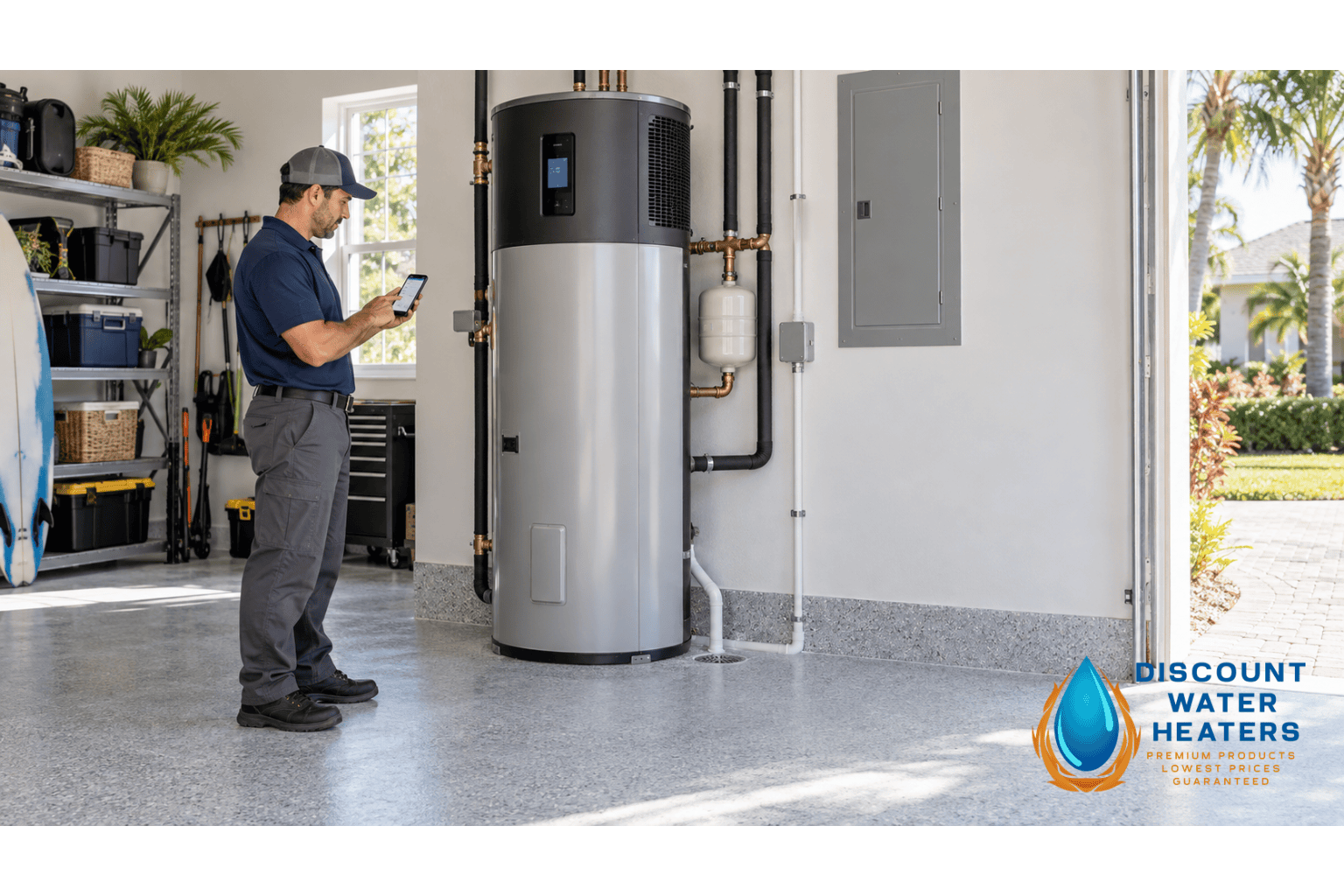
A heat pump water heater uses electricity to move heat from surrounding air into a storage tank instead of creating all heat through electric resistance. ENERGY STAR guidance says certified models can use about 70 percent less energy than a standard electric water heater. Actual savings depend on the installation, household, operating mode, climate, and electricity rate.
These units need adequate air volume or designed ducting, condensate drainage, appropriate electrical service, and a location where sound and cool exhaust air are acceptable. They can be a strong Florida option in some garages or utility areas, but the space must be evaluated rather than assumed.
Tankless systems remain a targeted solution
Tankless water heaters heat water as it flows and avoid keeping a large tank hot all day. They can provide long-duration hot water when sized for the required flow and temperature rise. They do not provide unlimited simultaneous capacity. A model still has a maximum output, and several showers or appliances can exceed it.
Gas units may require larger gas supply, compliant venting, combustion air, and condensate handling. Electric tankless models can require substantial panel and circuit capacity. Installation conditions often determine whether the upgrade is practical and whether operating savings justify the initial cost.
Connected controls can add useful visibility
Some modern water heaters offer apps, operating modes, energy information, scheduling, fault alerts, and utility-program connectivity. Those features can help a homeowner notice a problem sooner or avoid unnecessary operation. They should not replace physical maintenance, a working drain pan where required, or prompt attention to corrosion and leakage.
Before choosing a connected model, ask what functions continue without internet service, how software updates are delivered, whether alerts require a subscription, what data is collected, and how long the manufacturer supports the product. A simple reliable control may be better than features the household will never use.
Smarter leak response can limit damage
Leak sensors and compatible automatic shutoff devices can reduce exposure when they detect water and close a supply. They are risk-reduction tools, not a guarantee. Placement, testing, power, valve condition, network reliability, and maintenance affect performance. The system should have a clear manual override and every household member should know the main shutoff location.
A water heater nearing the end of its useful condition should not be kept indefinitely only because a sensor is present. Rust, tank leakage, combustion problems, damaged wiring, and failed safety components need professional evaluation.
Efficiency depends on the whole installation
A high-efficiency label cannot correct poor sizing, unsafe venting, missing drainage, unsuitable electrical service, or long uninsulated hot-water runs. Installation also has to follow manufacturer instructions and applicable code. Ask the contractor how household demand was calculated and which site conditions are included in the proposal.
The Department of Energy water heating guidance recommends considering size, energy source, efficiency, and cost when selecting a system. Compare estimated annual operating cost using local rates, but avoid treating a generalized savings figure as a personal guarantee.
Florida water and climate affect the choice
Warm incoming water can reduce the temperature rise required, while garages may offer useful ambient heat for some heat pump installations. Water chemistry varies by utility and private well. Mineral buildup can reduce heat transfer or restrict small passages, especially when maintenance is ignored.
Ask for maintenance requirements before buying. Tankless heat exchangers may need periodic descaling depending on water quality and manufacturer instructions. Storage systems may require inspection of the anode rod and sediment management. The right interval depends on the equipment, installation, and local water.
Replacement planning creates better choices
Waiting for a leaking tank can turn a considered upgrade into an emergency. If the existing unit is aging, document the model, fuel, location, capacity, electrical panel, venting, drain path, and household demand now. Then compare realistic replacement options while there is time to evaluate cost and installation changes.
Discount Water Heaters can help Florida homeowners assess tank, tankless, heat pump, gas, and electric options based on the actual home. For related whole-home comfort planning, One Hour Air Conditioning and Heating provides local HVAC guidance.
What homeowners should ask
Ask how the system was sized, what electrical or gas upgrades are included, how condensate and drainage will be handled, whether permits are required, which warranties apply, what maintenance is expected, and what happens during a power or internet outage. Request the complete installed price, not only the equipment price.
Home-service companies also depend on qualified technicians. Readers interested in the people behind installation and service can explore skilled-trades careers through Blue Collar Recruits. Better technology delivers its promise only when trained people select, install, commission, and maintain it correctly.
The practical future
Future water heaters will likely provide more efficiency, diagnostics, and control. The homeowner’s goal remains simple: safe, reliable hot water at a reasonable total cost. Choose the technology that fits the building and demand, use a qualified installer, keep the required maintenance, and treat smart features as support rather than a substitute for sound equipment. Keep model, serial, warranty, permit, and service records where the next homeowner or technician can find them. Review those records before authorizing future repairs. Good information prevents rushed household decisions later.
Frequently asked questions
Are heat pump water heaters good for Florida
They can be, especially in suitable warm spaces, but airflow, condensate drainage, sound, electrical service, capacity, and household use must be evaluated for the specific home.
Is tankless the future of water heating
Tankless is one important option, not a universal replacement. Flow demand, fuel or electrical capacity, installation changes, water quality, and maintenance determine whether it is a good fit.
Do smart controls prevent water heater leaks
Alerts and shutoff devices may reduce damage when properly installed and maintained, but they cannot prevent every failure. Physical inspection and timely replacement remain important.