
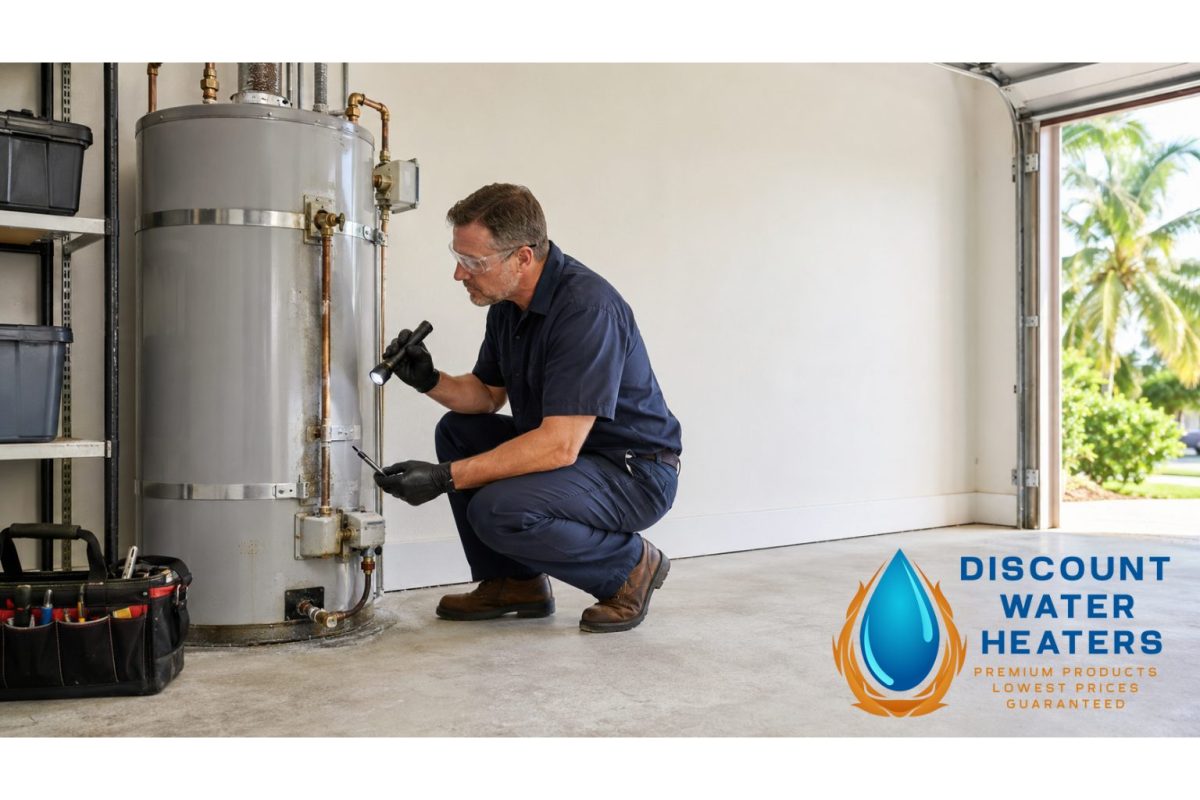
Choosing between a tank and tankless water heater is not a contest with one universal winner. A well-sized storage tank can deliver dependable hot water at a lower upfront cost, while a properly sized tankless system can save space and reduce standby energy use. The better choice depends on household demand, available fuel, electrical capacity, installation conditions, maintenance expectations, and how long you expect to remain in the home.
Florida adds several local considerations. Warm incoming water can reduce the temperature rise a heater must produce, but mineral content can accelerate scale. Garage and closet installations have different space, drainage, combustion-air, and venting needs. Before comparing models, start with the home you actually have, not a national headline or a promise of “endless” hot water.
How tank water heaters work
A conventional storage water heater heats a fixed volume of water and keeps it ready inside an insulated tank. Common residential sizes include 40 and 50 gallons, although smaller and larger options exist. The first-hour rating, not tank capacity alone, helps describe how much hot water a unit can supply during a busy hour because it combines stored water with recovery.
The format is familiar, compact enough for many garages and utility closets, and often straightforward to replace when the new heater uses the same fuel, size, and connections. Electric resistance, natural gas, propane, and heat-pump storage models each behave differently, so “tank” is a category rather than a single efficiency level.
Tank water heater advantages
Storage systems generally have a lower equipment and installation cost than a conversion to tankless. They can serve simultaneous fixtures from stored capacity, and many technicians are familiar with their parts and service requirements. A like-for-like replacement may also avoid the electrical, gas-line, venting, or condensate changes that a tankless conversion can require.
Tank water heater tradeoffs
A tank occupies floor space and experiences standby heat loss because it maintains hot water even when no fixture is open. Once the stored supply is depleted, the household must wait for recovery. The steel tank can eventually corrode, making age, anode condition, sediment, water chemistry, and leak protection important.
How tankless water heaters work
A tankless, or instantaneous, water heater activates when it detects flow. A burner or electric heating element raises the water temperature as it passes through the unit. Because the heater does not maintain dozens of gallons around the clock, it avoids the standby losses associated with conventional storage.
“Endless hot water” needs context. A tankless unit can continue heating as long as fuel, water, and the system remain available, but it has a maximum flow rate at a specified temperature rise. If multiple showers, a washer, and a sink together exceed that output, outlet temperature or flow can suffer. Correct sizing is therefore essential.
Tankless water heater advantages
Tankless units mount on a wall, preserving floor space. They can support long back-to-back usage when sized correctly and may offer strong efficiency, especially in condensing gas models. ENERGY STAR evaluates instantaneous water heaters using Uniform Energy Factor criteria; comparing UEF within the same product category is more meaningful than relying on marketing language alone.
Tankless water heater tradeoffs
The installed cost can be higher, particularly when conversion requires a larger gas line, new venting, a condensate drain, electrical work, or service upgrades. Electric whole-home tankless models may draw very high amperage, and not every electrical panel can support them. Gas models need manufacturer-approved combustion and venting arrangements. Mineral scale can collect in the heat exchanger, so periodic descaling is often part of ownership.
The five questions that usually decide it
-
How much hot water does the household use at once?
Count simultaneous fixtures, not just residents. A household that staggers showers may be comfortable with a modest system. A home that runs two showers and laundry together needs more output. For a tank, examine first-hour rating. For tankless, compare required gallons per minute at the expected temperature rise.
-
What utilities and infrastructure are available?
A gas tankless conversion may need higher gas capacity and different venting. An electric tankless conversion may need multiple large circuits or a panel upgrade. A heat-pump tank uses electricity efficiently but needs adequate air volume, drainage, and installation clearance. A professional site evaluation should identify these conditions before equipment is purchased.
-
How important are upfront cost and long-term operating cost?
A lower purchase price does not automatically mean the lowest lifetime cost, and a high-efficiency unit does not guarantee a quick payback. Compare installed price, expected energy use, maintenance, warranty terms, likely service life, and any infrastructure work. Discount Water Heaters’ existing Florida tank-versus-tankless cost comparison provides a focused look at the financial side.
-
What maintenance will actually be performed?
Storage tanks benefit from attention to sediment, the anode rod, valves, and visible corrosion. Tankless units may need descaling and inlet-filter service, especially where mineral content is high. A more efficient system that is neglected can underperform a simpler system that receives appropriate maintenance.
-
Is space or leak exposure a major concern?
Tankless systems free floor space and eliminate the risk of a large tank rupturing, although their plumbing can still leak. A storage heater should have appropriate drainage and protection for its location. Units above finished space deserve particular attention because even a slow leak can create substantial damage.
Florida-specific considerations
Incoming water in Florida is generally warmer than in northern climates, which can help tankless output because the required temperature rise is smaller. At the same time, local water chemistry can promote scale. The Treasure Coast’s salt air and humid conditions may also influence corrosion around exposed components and connections. Installation location and water treatment should be discussed as part of the system choice.
Households also need whole-home comfort beyond hot water. For air-conditioning maintenance and repair across Fort Pierce, Port St. Lucie, Stuart, and nearby communities, homeowners can visit One Hour Heating & Air Conditioning of Treasure Coast.
The practical answer
Choose a tank system when upfront affordability, straightforward replacement, and dependable stored capacity are the priorities. Consider tankless when wall space, long-duration hot-water use, and reduced standby loss justify the installation requirements and maintenance. In either case, correct sizing and professional installation matter more than the label on the box.
Discount Water Heaters installs both traditional and tankless systems across Florida’s Treasure Coast. Homeowners comparing options can review water heater replacement services or request a site-specific quote before deciding.
Frequently asked questions
Does a tankless water heater provide unlimited hot water?
It can heat continuously, but only up to its rated flow at a given temperature rise. If simultaneous demand exceeds the unit’s capacity, performance can drop.
Is tankless always cheaper to operate?
Not always. Operating cost depends on fuel price, efficiency, usage, sizing, maintenance, and installation changes. Reduced standby loss helps, but calculate the whole-life cost for the specific home.
Can I replace a tank with tankless in the same location?
Sometimes, but the conversion may require changes to gas supply, venting, condensate drainage, electrical circuits, or clearances. A licensed professional should evaluate the site.
Sources: ENERGY STAR residential water-heater criteria; Discount Water Heaters’ Florida installation guide.