
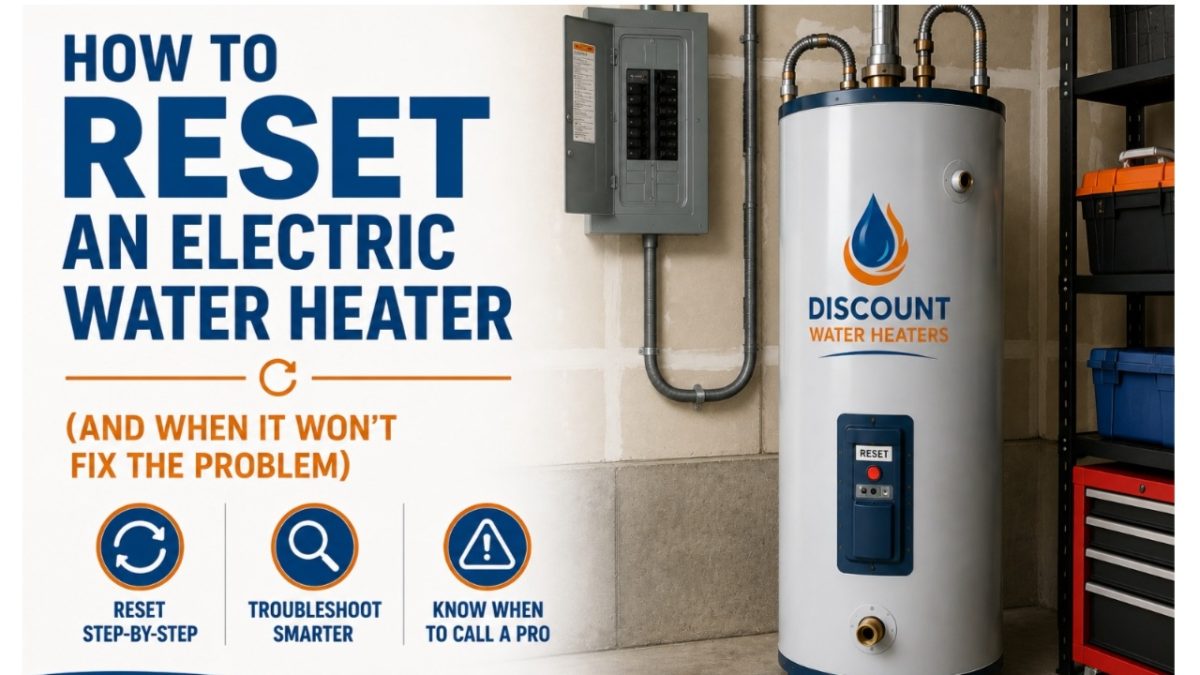
How to Reset an Electric Water Heater (And When It Won’t Fix the Problem)
If your electric water heater suddenly stopped producing hot water and the breaker is fine, there’s a small red button hidden behind a panel that fixes the problem about half the time. It’s the high-limit reset switch, and pressing it brings the unit back to life in under five minutes. It’s also the single most useful piece of DIY knowledge any homeowner with an electric water heater can have.
Here’s exactly how to reset an electric water heater, and what it means if the reset doesn’t hold.
What the Reset Button Actually Does
Inside an electric water heater, there’s a safety switch called the high-limit cutoff. If the water inside the tank gets too hot (usually above 180 degrees Fahrenheit), this switch trips and shuts down power to the heating elements to prevent damage or a steam explosion. When the switch trips, the unit looks dead. No hot water, no warning light, no obvious clue what’s wrong. The reset button lets you re-engage that switch and restore power.
What You’ll Need A flathead screwdriver, a flashlight, and a few minutes. That’s it.
Step 1. Turn Off the Power Before You Open Anything Go to your main electrical panel and flip the breaker labeled water heater to the off position. Even though you’re going to reset a switch, you need the power off before you remove access panels. Working on a live electric water heater is how people get hurt, and electric water heaters carry 240 volts, more than enough to cause serious injury.
Step 2. Locate the Upper Access Panel Most residential electric water heaters have two access panels on the front: one near the top of the tank, one near the bottom. The reset button is behind the upper one. Use your screwdriver to remove the two or four screws holding the panel in place. Set the panel and screws aside where you’ll find them.
Step 3. Pull Back the Insulation Behind the panel, there’s a layer of fiberglass insulation. Pull it back carefully and wear gloves if you have them, since fiberglass irritates skin. You should now see the thermostat and a small red button. That red button is your reset.
Step 4. Press the Reset Button Press the red button firmly. You may hear or feel a small click. That’s the high-limit switch re-engaging. If the button was already in and didn’t click, it wasn’t tripped, which means your problem is somewhere else. See our water heater repair page for the next steps.
Step 5. Replace the Insulation and Panel Tuck the insulation back into place. Reattach the access panel and screw it down. Don’t leave the panel off. The insulation matters for energy efficiency, and the DOE notes that proper insulation reduces standby heat loss significantly.
Step 6. Restore Power Go back to your electrical panel and flip the breaker on. Wait 30 to 45 minutes, then test a hot water tap. If you have hot water, you’re done.
What It Means If the Reset Won’t Hold
Pressing the reset and having it pop right back out within hours or even minutes is the unit telling you something else is wrong. Here are the most common culprits.
Failed thermostat. The thermostat is stuck calling for heat even when the water is already hot, so the unit overheats and trips the high-limit switch again. Repair is straightforward for a pro and usually affordable.
Failed heating element. One of the two heating elements is shorted or stuck on, dumping too much heat into the tank. Replacement is a standard repair.
Heavy sediment buildup. Sediment insulates the lower element, which then overheats trying to push heat through. Annual flushing sometimes solves it. If the tank is older, replacement is often the better call.
Wiring fault. A loose or corroded wire can cause the switch to misread temperatures and trip falsely. This is a pro job.
Bad high-limit switch. The switch itself can fail and trip without cause. Cheap part, professional install.
Common Mistakes to Avoid
Don’t keep pressing the reset over and over. If it trips twice, stop and call. Repeatedly resetting a unit that’s overheating is how you end up with a damaged tank, scalded water, or a fire. Don’t reset the unit without the breaker off first, and don’t skip replacing the insulation when you’re done.
When to Call a Professional
If the reset doesn’t hold for at least 24 hours, the tank is more than 8 years old, or you see any sign of water around the base, stop the DIY and call. Continuing to reset a failing unit usually costs more in damage and energy than just fixing the underlying problem. If you’re not sure who to hire, our guide on what to look for in a water heater company walks through what separates a good Florida pro from the rest.
For Florida homeowners, Discount Water Heaters can diagnose a reset-won’t-hold call and have the right fix in hand same day. Call (772) 202-6671 and stop guessing.
Related Resources for Florida Homeowners
If a reset didn’t fix the problem, it’s time for a deeper look. Learn how to diagnose water heater problems at home before spending money on a service call. For noise-related issues alongside no heat, check our guide on water heater noises and what they mean. If your unit is over 10 years old, compare the real cost of installation in Fort Pierce — repair vs. replace often tips toward replacement.
Related resources: Learn more about water heater repair, same-day water heater installation, water heater maintenance.
2026 Update: When the Reset Button Doesn’t Fix It
If your reset button keeps tripping, the issue is usually a failing heating element or thermostat rather than the button itself — our repair technicians can diagnose it same-day. Persistent tripping on an older unit is also a sign it may be time to consider replacement. If you’re a technician skilled at electrical diagnostics, The Blue Collar Recruiter connects you with employers hiring in Florida.