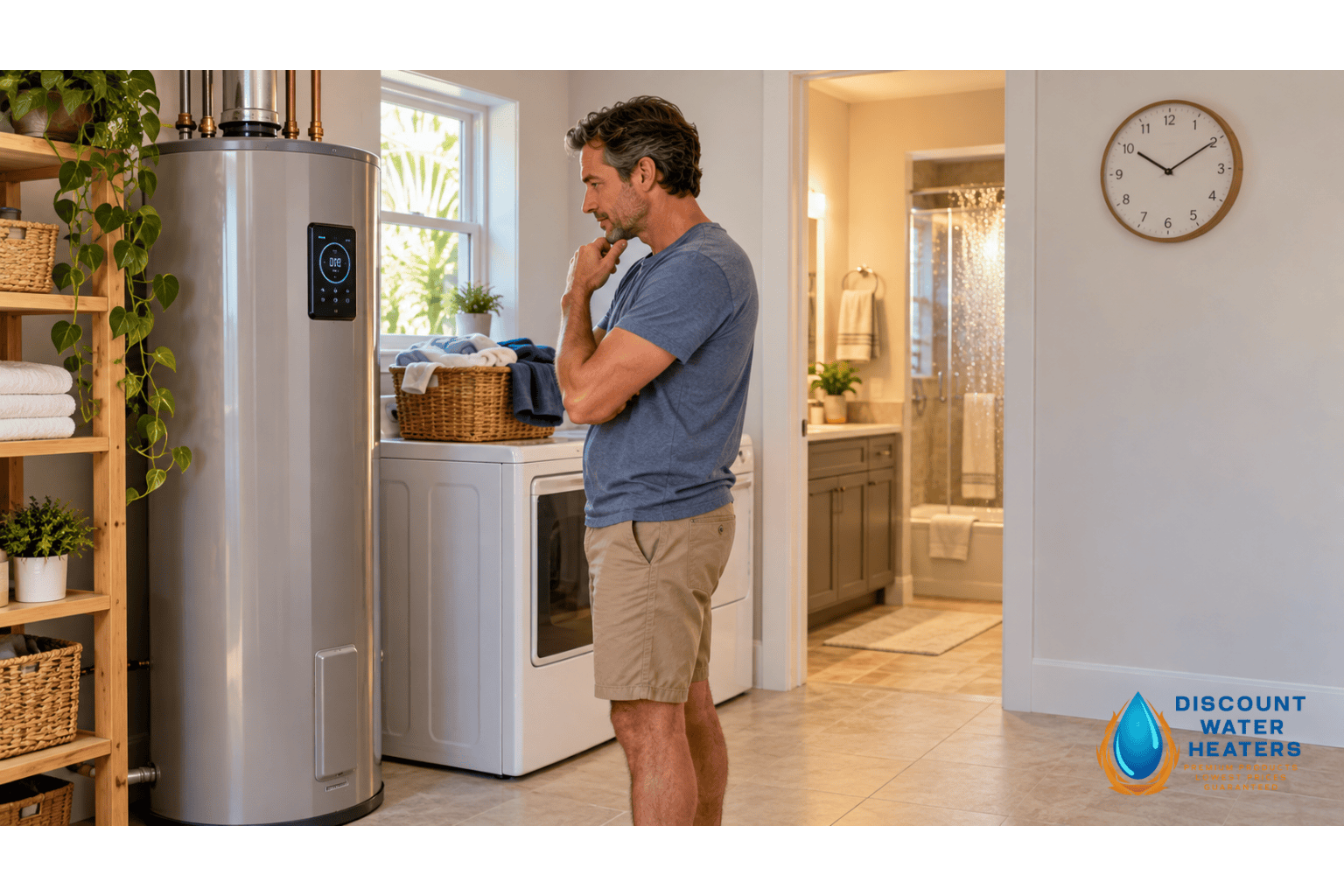
Start by identifying when and where the shortage happens
When hot water runs out quickly, the cause may be heavy use, a fixture problem, a changed setting, insufficient capacity, or a failed component. The pattern matters. A shortage after several showers differs from water turning cold at one faucet after only a few minutes.
Avoid making several changes at once. One careful observation at a time makes the pattern easier to explain and reduces the chance of masking a fault.
Homeowners can gather useful evidence without opening panels, touching wiring, draining a tank, or changing gas components. If there is a gas odor, smoke, electrical arcing, active leaking near electrical equipment, or a carbon-monoxide alarm, leave the area and contact the appropriate emergency or utility service.
Determine whether one fixture or the whole home is affected
Test hot water at more than one faucet after allowing normal travel time from the heater. If only one shower loses heat, a local cartridge, mixing valve, or flow issue may be involved. If every fixture follows the same pattern, the heater, piping, or household demand is more likely.
Record how long the water stays hot, which fixtures were used beforehand, and whether the temperature fades gradually or changes suddenly. Note recent plumbing work, guests, appliance use, outages, or control changes. This timeline gives a technician more value than a general statement that the heater is not working.
Review recent household demand
Back-to-back showers, laundry, dishwashing, and a large tub can deplete a storage tank faster than it recovers. Stagger those uses once and see whether performance returns. That simple comparison can distinguish an equipment limit from an ongoing malfunction.
People, habits, and fixtures change. A new high-flow showerhead, longer showers, additional household member, larger tub, or simultaneous appliance cycle can create a shortage even when the heater operates as designed. Estimate peak demand, not only average daily use.
Allow the expected recovery time
A storage heater needs time to warm incoming cold water. Recovery depends on tank size, fuel, heating input, set temperature, and inlet-water temperature. Electric and gas models with similar tank sizes can recover at different rates.
The Department of Energy overview of storage water heaters explains that hot water leaves from the top while cold replacement water enters near the bottom through a dip tube. Heavy use can temporarily exceed the unit’s ability to reheat the tank.
Check external controls and operating modes
Read only the external display or accessible user control. Confirm the heater is not in vacation, away, low-energy, or disabled mode and note any error code. A power outage, app update, or accidental input can change a schedule or mode.
Do not raise the temperature aggressively to make a small tank feel larger. Higher temperatures increase scald risk and may not address the actual cause. Follow the exact manufacturer manual and keep children, older adults, and other vulnerable users in mind.
Understand capacity and first-hour rating
Tank capacity alone does not describe delivery. The first-hour rating estimates how much hot water a storage heater can supply during a heavy-use hour, combining stored hot water and recovery. Compare that rating with the household’s peak-hour demand.
The Department of Energy’s water-heater sizing guidance explains how to use first-hour rating for storage models. A properly operating heater can still run short when peak demand regularly exceeds its rated delivery.
For tankless systems consider flow and temperature rise
Tankless units do not store a reservoir, but they have maximum flow capacity at a given temperature rise. Several simultaneous fixtures or unusually cold inlet water can exceed that capacity. The result may be cooler water, reduced flow, or a system response defined by the model.
Check the external display for error codes and compare the active fixtures with the manual’s capacity information. Do not remove the cover, alter gas pressure, descale components, or bypass flow and temperature controls as a diagnostic shortcut.
Consider heat-pump modes and recovery
Heat-pump water heaters can have operating modes that balance efficiency and recovery. An efficiency-focused mode may recover differently during unusually high demand. Review the external setting and model instructions before changing anything.
If the unit recently changed modes or the household demand increased, note whether a manufacturer-approved setting improves the pattern. Frequent shortages during ordinary demand still deserve evaluation rather than permanent use of a more intensive mode without understanding the cause.
Recognize problems that require diagnosis
A failing electric element can leave only part of a tank heated. Burner or ignition problems can slow gas recovery. Thermostat or control faults, sediment accumulation, a damaged dip tube, mixing-valve problems, plumbing crossover, or recirculation issues can also reduce usable hot water.
These conditions can resemble one another. Do not open access panels, test live voltage, adjust combustion equipment, or drain a tank simply to experiment. A qualified technician can test components and confirm whether the issue is repairable or related to system design.
Look for visible warning signs
Without moving the heater, check for standing water, active drips, corrosion trails, bulging, damaged venting, unusual sounds, or relief-line discharge. Keep away from wet electrical equipment. A leaking tank or combustion concern needs prompt professional attention.
Photograph the display, rating label, visible condition, and any error code. Record the model, serial number, approximate age, fuel type, household size, and peak-use pattern. This information helps Discount Water Heaters prepare for a more focused diagnosis.
Decide whether sizing or service is the next step
If performance is normal when use is staggered but consistently inadequate during predictable peaks, compare the first-hour rating or tankless capacity with real demand. If the heater used to meet the same demand and no longer does, a component or condition may have changed.
Ask a professional to explain the diagnosis, repair cost, warranty, expected remaining life, and replacement options. Broader power or home-comfort problems after an outage may also warrant help from One Hour Air Conditioning and Heating of the Treasure Coast, while water-heater work should remain with the appropriate qualified trade.
Frequently asked questions
Why does my shower go cold before other fixtures?
A shower cartridge, mixing valve, flow rate, or usage pattern may be involved. Compare other fixtures before assuming the heater has failed.
Will turning up the water heater make hot water last longer?
It may change usable volume in some systems, but it increases scald risk and can hide sizing or equipment problems. Follow manufacturer guidance and seek professional advice.
Does sediment always mean the tank must be replaced?
No. The correct response depends on tank condition, age, design, maintenance history, and diagnosis. Avoid draining or flushing without model-specific guidance.