
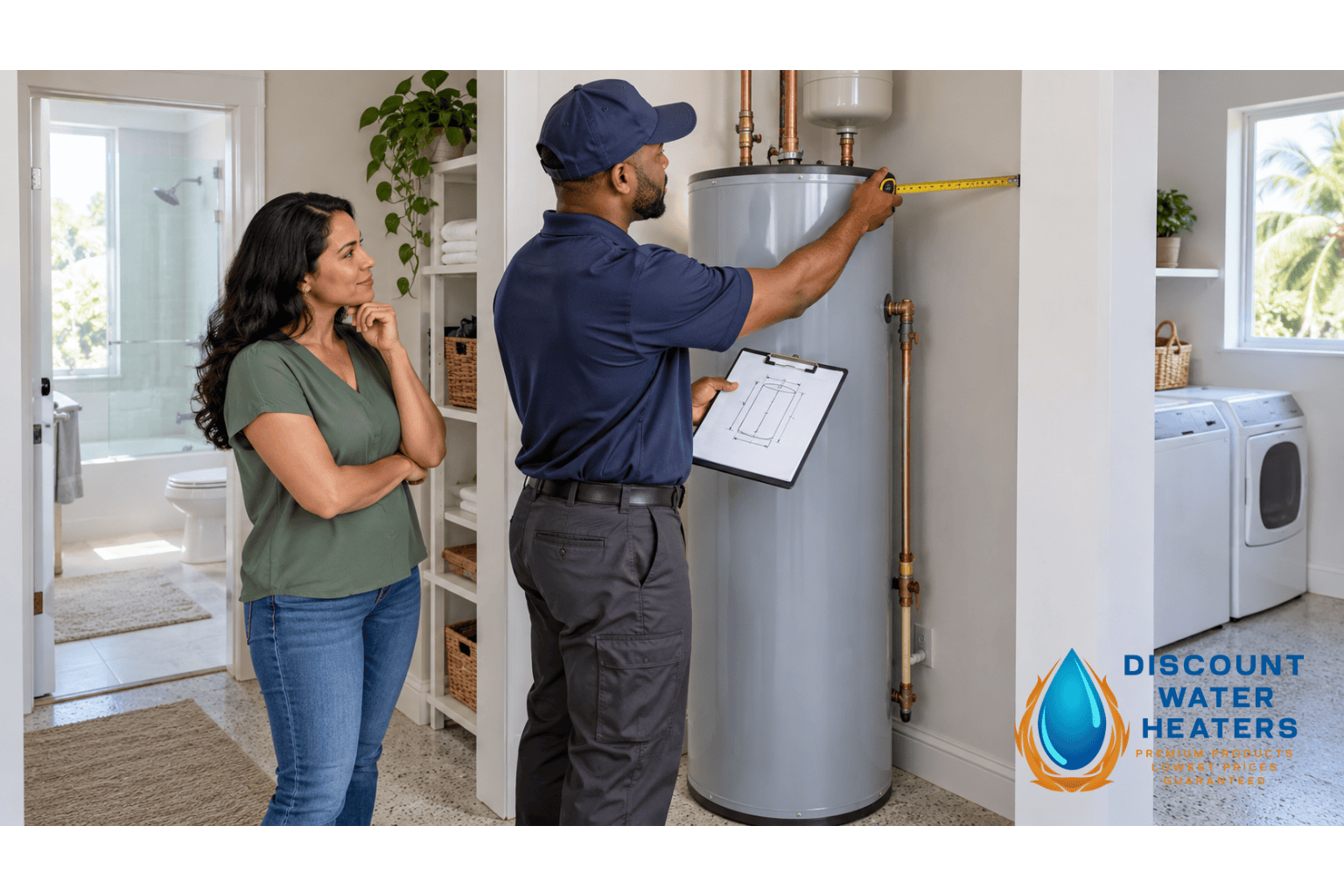
The right system depends on the home
The right water-heater size is not simply the capacity already installed. Households change, equipment types deliver hot water differently, and an old unit may have been oversized or unable to meet peak demand.
Sizing should begin with how hot water is used: number of occupants, bathrooms, simultaneous showers, tubs, laundry, dishwashing, guest patterns, and the time of day when demand is highest.
Measure peak demand
List fixtures and appliances likely to run during the busiest hour. Occasional overlap can matter more than daily gallons.
The correct answer depends on the actual home, equipment, water quality, utility rates, and household demand. General guidance cannot replace an on-site evaluation.
Use first hour rating for tanks
Storage capacity and recovery determine how much hot water a tank system can deliver during a busy hour. Tank gallons alone are incomplete.
Request a complete installed price that identifies electrical, gas, venting, drainage, permit, and disposal work. Equipment price alone can be misleading.
Use flow and temperature rise for tankless
Add simultaneous flow rates and account for how much the incoming water must be heated. Manufacturer output changes with temperature rise.
Follow manufacturer instructions and applicable code, and use a qualified professional for installation or safety-related service. Hot water systems combine heat, pressure, electricity, or fuel.
Size heat pump systems carefully
Larger tanks and operating modes can help the heat pump meet demand without relying excessively on backup resistance heat.
Keep the model, serial number, warranty, permit, and service history together. Good records make future maintenance and replacement decisions faster.
Check available utilities
Electrical panel capacity, gas supply, venting, condensate, drainage, and space may limit practical choices or add installation cost.
Ask how the proposed system will perform during the household’s busiest period, not only under average daily use.
Avoid automatic oversizing
Larger equipment can cost more, occupy more space, and increase standby loss for some systems. Match capacity to evidence and reasonable growth.
Confirm access for future inspection and service. A difficult installation can increase maintenance cost for the life of the equipment.
Plan for unusual uses
Large soaking tubs, frequent guests, back-to-back showers, recirculation, and home businesses can change the calculation.
Compare warranties by covered component, labor terms, registration, maintenance requirements, and exclusions rather than headline duration alone.
A 30 day implementation plan
During the first week, document the current position on measure peak demand, use first hour rating for tanks, and use flow and temperature rise for tankless. Gather the records, costs, timing, and feedback that already exist. Do not begin by assuming the answer. Establish a baseline that shows what is working, where the process breaks, and which condition creates the greatest practical risk.
In the second week, assign one person to test an improvement connected with size heat pump systems carefully and check available utilities. Define the decision that person can make, the people who need to participate, and the evidence that will show progress. Keep the test narrow enough to learn from it without disrupting the entire operation or household plan.
During week three, review the evidence related to avoid automatic oversizing and plan for unusual uses against the original goal. Ask what changed, what remained outside the team’s control, and whether the proposed action created a new cost or risk elsewhere. Record the lesson in plain language so the next decision begins with stronger information instead of another guess.
In the fourth week, choose what to standardize, what to revise, and what to stop. Confirm the owner, schedule, documentation, and next review date. A useful plan does not require every answer in advance; it requires a clear next action, a responsible person, and a way to recognize when new evidence should change the decision.
Common mistakes to avoid
Avoid selecting equipment from a promotional claim or old tank label alone. Do not approve an installation until capacity, utilities, drainage, permits, access, warranty, and maintenance are understood. Slow down when an estimate depends on an assumption that has not been verified. The strongest decision is usually the one that remains sensible after cost, timing, limitations, and future maintenance are considered together.
Connect the decision to the larger ecosystem
The Department of Energy water-heater selection guidance recommends comparing size, fuel, efficiency, and cost. Discount Water Heaters can calculate demand and evaluate the home’s utilities and installation conditions. For related home-comfort planning, homeowners can also consult One Hour Air Conditioning and Heating.
A practical final review
Before approving the project, ask for the selected model, capacity basis, complete scope, installed price, permit responsibility, warranty terms, maintenance needs, and expected operating behavior in writing. Confirm that the home’s electrical, gas, venting, drainage, space, and access conditions support the proposal without relying on an unpriced future change.
Recheck the assumptions behind measure peak demand, use first hour rating for tanks, and use flow and temperature rise for tankless. Use the documents, measurements, local conditions, and direct conversations described above rather than relying on memory or a general rule. Then review how size heat pump systems carefully and check available utilities affect cost, timing, safety, or performance. A decision is ready only when those tradeoffs are visible and the responsible person understands the next action.
Finally, decide how avoid automatic oversizing and plan for unusual uses will be monitored after the initial choice. Set a realistic review date and identify the evidence that would justify continuing, adjusting, or stopping the plan. Keep the rationale with the relevant records so a future employee, adviser, technician, or household member can understand why the decision was made and what conditions would change it.
Before approving work, confirm the diagnosis, scope, warranty, expected maintenance, and any changes required elsewhere in the home. Sizing should reflect simultaneous use and recovery needs rather than simply copying the old equipment label. Efficiency estimates depend on local rates, operating mode, installation quality, household behavior, and the condition of connected systems. Never defeat a safety device or attempt gas, combustion, pressure, or electrical work beyond your qualifications. Plan replacement before a leaking tank turns a considered purchase into an emergency. A reliable installation is more valuable than a feature list that the home cannot support.
Frequently asked questions
Is a 50 gallon water heater enough
It may be, but household size alone is not decisive. Review first-hour rating, recovery, fixtures, timing, and actual peak use.
What size tankless water heater do I need
Size by simultaneous flow and required temperature rise, then confirm fuel or electrical capacity and manufacturer data.
Should I replace with the same size
Not automatically. Recalculate demand and evaluate whether the old system consistently met needs before copying its label.