
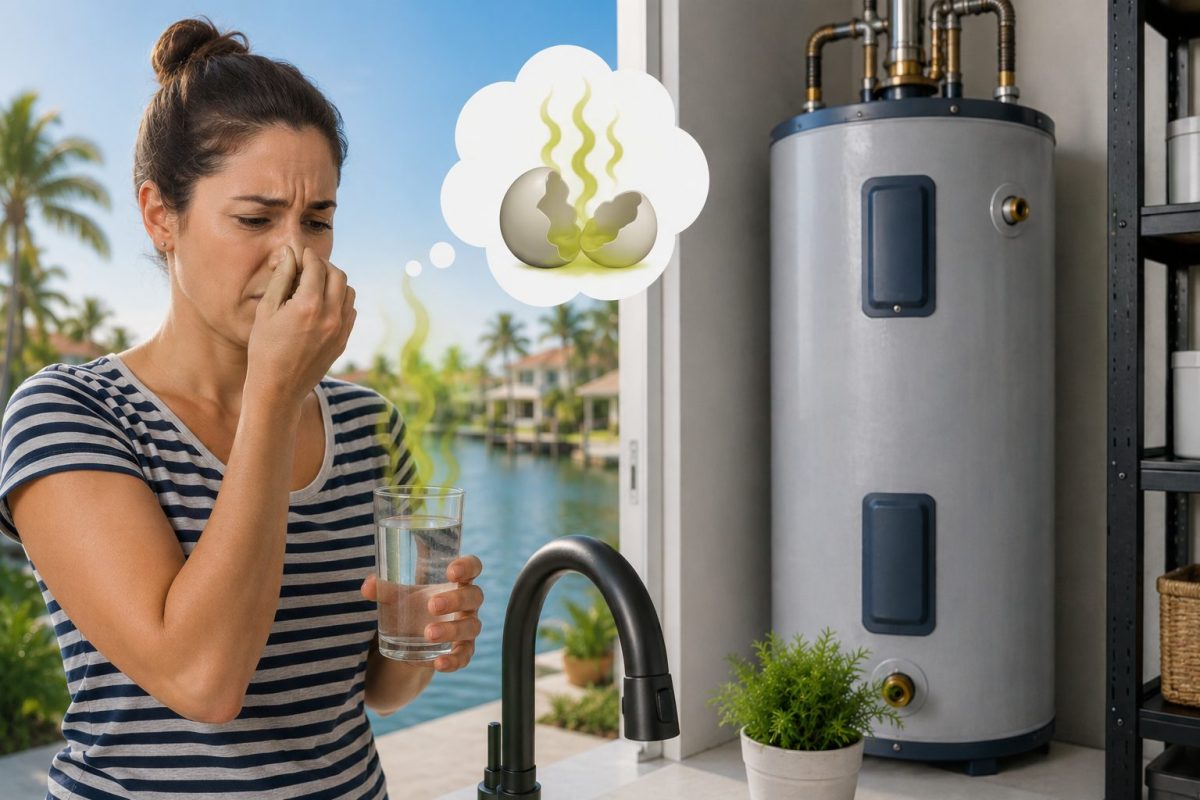
You turn on the shower, wait for the water to warm up, and then it hits you. Sulfurous, musty, unmistakably foul. If the smell is coming from your hot water but not your cold, you are dealing with a very solvable problem. Here is exactly what is causing it and what to do about it.
What’s Actually Causing the Smell
It is not sewage. It is hydrogen sulfide gas, produced when sulfur bacteria inside your water heater tank react with the magnesium anode rod. The anode rod is a sacrificial metal component designed to corrode slowly so your tank walls do not. That is its job. But when sulfur bacteria are present, that corrosion process releases hydrogen sulfide gas and the result is that rotten egg smell coming out of your faucet.
Florida homes are especially prone to this. Our groundwater naturally contains higher concentrations of sulfur compounds, particularly in homes on well water. Even municipal water supplies in South Florida carry enough sulfates to feed bacteria once they enter a warm tank. If your home also has a water softener, your risk is even higher. Softening reduces the mineral competition that normally limits bacterial activity, making it easier for sulfur bacteria to thrive. Read our hard water guide to understand how Florida water chemistry affects your system overall.
The Two Minute Test
Fill a glass from your cold tap and smell it. Then fill a glass from your hot tap and smell it. Hot water smells but cold does not? Your water heater is the source. Both smell? The problem is upstream in your well or supply line and this guide is not your fix.
For the rest of this post we are addressing the most common scenario: hot water only, which points directly at the tank.
How to Fix It
Flush the tank first. Sediment and stagnant water at the bottom create ideal conditions for bacteria to multiply. Drain the tank until the water runs clear. This will not eliminate the problem on its own but it removes the buildup sustaining the bacteria. See our step-by-step flush guide if you have not done this before.
Replace the magnesium anode rod with an aluminum-zinc rod. This is the most effective long-term fix. Aluminum-zinc rods do not produce the same hydrogen sulfide reaction when exposed to sulfur bacteria. The swap involves shutting off the heater, relieving tank pressure, and accessing the rod at the top of the tank under a hex head fitting. Doable for a confident DIYer with the right socket size, typically 1-1/16 inch. This is also one of the five tasks covered in our ultimate water heater maintenance guide.
Shock the tank with hydrogen peroxide. Introducing a diluted hydrogen peroxide solution through the anode rod opening and letting it sit for a few hours before flushing can kill bacteria temporarily. Works best as a complement to the rod replacement, not a standalone fix.
Raise the temperature temporarily. Setting the heater to 140°F for several hours can kill sulfur bacteria through heat. Use real caution here. Water at 140°F causes scalding burns in seconds and is dangerous around children and elderly adults. If anyone vulnerable is in your home, skip this method entirely. For guidance on the right everyday setting, check our guide on what temperature your water heater should be set to (link once published).
Quick Checklist Before You Start
Does only the hot water smell or does the cold water smell too? When was the tank last flushed? What type of anode rod is in the tank? How old is the water heater? Is the smell getting stronger over time? Do you have well water or a water softener?
Those answers determine which fix makes the most sense for your situation.
When to Call a Pro
If the existing rod is corroded to the point where it will not unthread without damaging the tank, if there is rust around the fittings, or if the smell comes back within a few weeks of a rod replacement, the tank may be failing internally. A unit over 10 years old with recurring odor is usually a replacement conversation, not another repair. Check the 7 signs your water heater is about to fail to see where yours stands. If you are not sure what is going on with your unit beyond the smell, our guide on diagnosing water heater problems at home walks through the full checklist.
Discount Water Heaters has licensed technicians available same-day across Fort Pierce, Port St. Lucie, and the surrounding Treasure Coast. Every tech is vetted through The Blue Collar Recruiter.
Get your free quote today → or call or text (772) 202-6671
Related Resources for Florida Homeowners
A rotten egg smell is often a symptom of broader water quality issues. Read how hard water damages your water heater and what to do about it in Florida’s mineral-rich water supply. Learn the 5 essential DIY maintenance tasks to keep your unit running clean. If problems persist, review how to diagnose water heater problems at home before calling a technician.
Related resources: Learn more about water heater maintenance, professional water heater repair, hard water effects on water heaters.
Related Resources for Florida Homeowners: Why Is My Hot Water Brown or Rusty? and Water Heater Problems in Treasure Coast, FL: Hard Water Solutions.