
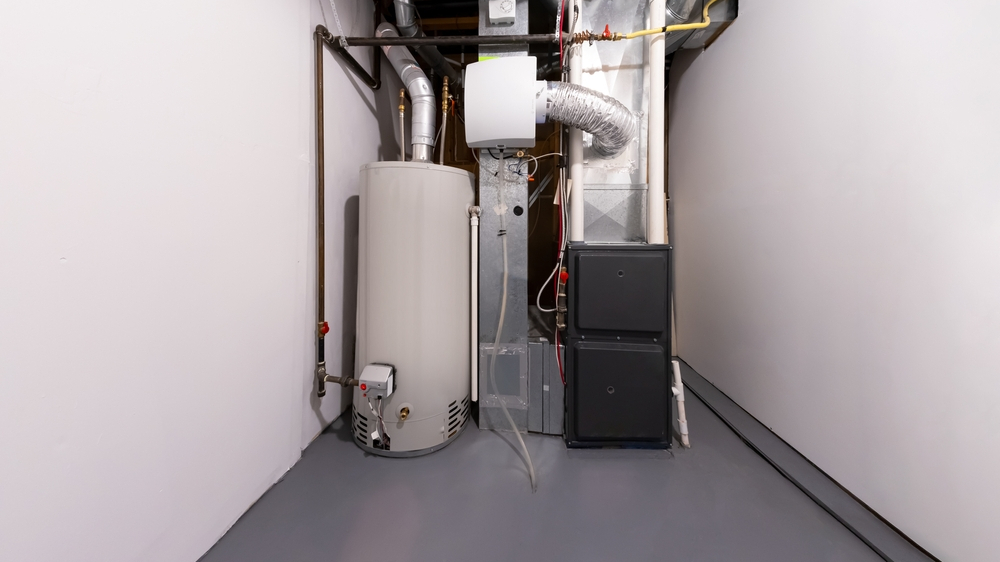
That strange noise coming from your water heater isn’t something to ignore. Whether it’s a low rumble, a sudden bang, or a high-pitched whine, your water heater is trying to tell you something. Knowing what it means can save you from a cold shower, a flooded basement, or a $1,200+ emergency replacement.
This guide breaks down every common water heater noise, what’s causing it, and whether you need to fix it now, call a plumber, or start shopping for a new unit.
Why Is My Water Heater Making Noise? (Quick Answer)

Most water heater noises come from one of four things:
- Sediment buildup on the tank floor or heating element
- Pressure or temperature issues inside the tank
- Failing components like valves, elements, or the anode rod
- Pipe movement from normal expansion and contraction
The noise tells you which one. Here’s how to read it.
Water Heater Noise Guide: What Each Sound Means

Popping or Rumbling
Cause: Sediment — calcium and magnesium minerals from your water supply — settles on the bottom of the tank. When water trapped beneath that layer heats up, it forces through the buildup, creating that popping or rumbling sound.
How urgent is it? Moderate. It won’t fail immediately, but it’s shortening your unit’s life and driving up your energy bill.
Fix: Flush the tank. Connect a garden hose to the drain valve and run it until the water comes out clear. If flushing doesn’t stop the noise, the sediment has likely hardened — at that point, replacement is usually more cost-effective than continued repairs.
Hissing
- Gas water heater: Usually condensation dripping onto the burner. Common when the tank refills with cold water. Generally harmless and fades as the unit warms up.
- Electric water heater: Sediment coating the heating element causes water to boil and escape around it.
- T&P valve hissing: This is the one to take seriously. If the hissing is coming from the temperature and pressure relief valve on the side of the tank, your unit may be over-pressurized. Call a plumber.
How urgent is it? High if it’s the T&P valve. Moderate otherwise.
Banging or Hammering
Cause: Water hammer — a hydraulic shock that happens when water flow suddenly stops or changes direction. You’ll usually hear it when a washing machine, dishwasher, or toilet finishes a cycle. It’s coming from the pipes, not the heater itself.
How urgent is it? Moderate. It won’t damage the heater directly, but repeated water hammer can stress pipe joints over time.
Fix: Install water hammer arrestors on your appliance supply lines. They run $15-30 each and absorb the shock before it travels through your plumbing.
Ticking or Tapping
Cause: Pipes expanding and contracting as water temperature changes. This is normal, especially with copper or plastic supply lines.
How urgent is it? Low. Usually nothing to worry about.
One thing to check: Some newer water heaters have plastic heat trap nipples that create a ticking sound. If it’s bothersome, they can be swapped for non-heat-trap nipples without affecting performance.
Screeching or Whining
Cause: Almost always a valve issue. When water is forced through a partially closed inlet control valve, it creates a high-pitched whine — similar to a boiling kettle.
How urgent is it? High. This will get worse.
Fix: Check that your cold water inlet valve (directly above the tank) is fully open. If the noise continues, the valve is likely failing and needs replacement.
Knocking
- Gas units: Delayed ignition — gas builds up before igniting, causing a small explosion in the burner. This is a safety concern.
- Tank units: Heavy sediment knocking against the tank walls as water heats and moves.
How urgent is it? High. Get a professional to look at a gas unit with delayed ignition.
Gurgling
- Tank units: Sediment. Water bubbles up through the buildup as it heats.
- Tankless units: Can be normal condensate drainage, but persistent gurgling usually means scale on the heat exchanger — especially common in hard water areas.
Fix: Flush a tank unit. Descale a tankless unit with a vinegar flush annually.
When to Fix It vs. When to Replace It

Replace your water heater if:
- It’s 10+ years old (gas) or 12+ years old (electric) and making noise
- You flushed it and the noise is still there
- There’s rust or discoloration in your hot water
- You see water pooling near the base of the unit
- Repair costs exceed 50% of a new unit’s price
Repair or service if:
- The unit is under 8 years old
- The noise is isolated to a single component (valve, element, anode rod)
- The tank has no rust, no leaks, and is otherwise performing well
How to Find Your Water Heater’s Age

Check the serial number on the label. Most manufacturers encode the manufacture date into the first few characters:
- Rheem / Ruud: First two characters = year and week (e.g., “2011” = 20th week of 2011)
- A.O. Smith: Second and third characters = year (e.g., “F19” = 2019)
- Bradford White: First letter = year on a repeating 20-year cycle (check their site)
- State Water Heaters: Similar to A.O. Smith
Not sure? Plug the full serial number into HVACage.com — it decodes most major brands instantly.
How to Prevent Water Heater Noises (Annual Maintenance Checklist)

Most of these noises are preventable. Do this once a year:
- Flush the tank — drain until the water runs clear to remove sediment before it hardens
- Inspect the anode rod — replace it when it’s less than 1/2″ thick or heavily coated in calcium
- Test the T&P valve — lift the lever briefly to confirm it releases and reseats; replace it if it drips
- Check connections for corrosion — look for white or green buildup at the inlet and outlet connections
- Descale your tankless unit — run a vinegar flush through the heat exchanger, especially in hard water areas
The Bottom Line

Water heater noises are your unit asking for attention. Most have simple, affordable fixes — but left unchecked, they compound. A sediment problem that costs nothing to fix with a flush today can turn into a $1,400 tank replacement in two years if the buildup hardens and damages the heating element.
If your unit is over a decade old and making noise, get ahead of it. A new high-efficiency water heater typically pays for itself in energy savings within a few years — and you won’t be dealing with a same-day emergency replacement when it finally gives out.