
Reviewed and updated for 2026 with current Treasure Coast pricing and product information.
If you live in Treasure Coast, Florida, your water heater is facing a brutal enemy: hard water. The mineral-heavy water flowing through Port St. Lucie, Stuart, Fort Pierce, and surrounding areas destroys water heaters faster than anywhere else in the country.
The reality: A water heater that lasts 12 years in soft water areas fails in 6-8 years here. You’re not imagining it. Your water heater isn’t defective. Florida’s hard water is the problem, and understanding how to combat it saves you thousands in premature replacements.
Here’s what Treasure Coast homeowners need to know about hard water and water heater survival.
Why Treasure Coast Water Is So Hard
Treasure Coast water comes from the Floridan Aquifer, which filters through limestone for thousands of years. This creates extremely high concentrations of calcium, magnesium, and other minerals.
Typical hardness levels:
Treasure Coast water: 180-250 ppm (parts per million) or higher
“Hard” water classification: 121-180 ppm
“Very hard” water: 180+ ppm
Translation: Our water is off-the-charts hard. Those white crusty deposits on faucets, showerheads, and appliances? That’s calcium carbonate. The same mineral buildup happening on visible surfaces is destroying your water heater internally.
How Hard Water Kills Water Heaters
Sediment accumulation at tank bottom: Minerals settle as water heats. Over months and years, sediment builds up several inches thick. This insulation layer forces the heating element or burner to work harder, causing premature failure.
Anode rod depletion: The sacrificial anode rod inside your tank corrodes instead of the tank itself. Hard water accelerates this corrosion. Once the anode rod disintegrates (happens faster in hard water), your tank starts rusting. Game over.
Heating element burnout (electric units): Sediment coating heating elements causes overheating and failure. Replacing elements every 2-3 years instead of 5-7 years costs hundreds unnecessarily.
Reduced efficiency and capacity: Sediment takes up space in your tank. A 50-gallon tank with 6 inches of sediment holds maybe 40 gallons of usable hot water. You’re heating minerals, not water.
According to WaterTech, hard water reduces water heater lifespan by 30-50% compared to soft water areas.
One of the top mistakes homeowners make is ignoring hard water’s impact when replacing water heaters, then wondering why the new unit fails just as fast.
Solution 1: Regular Tank Flushing (Essential Maintenance)
Flushing removes sediment before it causes damage. In Treasure Coast, this isn’t optional maintenance. It’s survival.
Flushing schedule for Treasure Coast homes:
Every 6 months minimum (not annually like soft water areas)
Every 3-4 months if your water is exceptionally hard or you notice rumbling noises
What flushing does: Removes mineral sediment from tank bottom. Extends heating element life. Improves efficiency. Reduces noise from boiling water trapped under sediment.
DIY or professional: You can flush yourself (attach hose to drain valve, drain water until clear). But if you’ve never done it or your water heater is 5+ years old without previous flushing, call professionals. Heavily calcified drain valves often break when homeowners try forcing them.
Discount Water Heaters offers professional flushing services throughout Treasure Coast. We handle stuck valves, inspect anode rods, and identify problems before they become emergencies.
Solution 2: Water Softener Installation (Best Long-Term Fix)
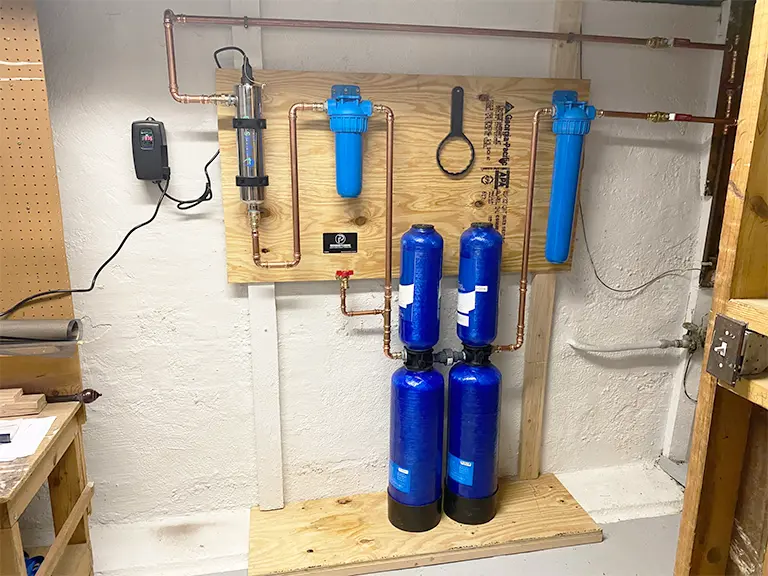
A whole-home water softener removes minerals before they reach your water heater, appliances, and fixtures.
How it works: Ion exchange replaces calcium and magnesium with sodium or potassium. Soft water flows throughout your home. No mineral buildup anywhere.
Benefits beyond water heater protection:
Appliances (dishwashers, washing machines) last longer. Soap and shampoo work better, requiring less product. Cleaner dishes and laundry. No crusty buildup on faucets and showerheads. Smoother skin and hair.
Cost vs. savings:
Water softener installation: $1,500-$3,000
Water heater replacement every 6-8 years without softener: $1,200-$2,500
Water heater replacement every 10-15 years with softener: Same cost but less frequent
Plus savings on appliances, cleaning products, soap, and energy bills.
Payback period: 3-5 years typically, then pure savings afterward.
Solution 3: Tankless Water Heaters (Better Hard Water Resistance)
Tankless water heaters handle hard water better than traditional tanks because water flows through rather than sitting and depositing minerals.
Why tankless resists hard water:
No storage tank for sediment accumulation. Water heats on-demand as it flows through heat exchanger. Annual descaling flush removes mineral buildup. Longer lifespan (20+ years vs. 8-12 for tanks, even in hard water).
The maintenance requirement: Tankless units still need annual descaling in Treasure Coast. Neglect this and hard water will clog the heat exchanger. But annual maintenance is simpler than dealing with tank sediment.
Investment comparison:
Traditional tank: $1,200-$2,000 installed, replace every 6-8 years in Treasure Coast
Tankless: $2,500-$4,500 installed, lasts 20+ years with proper maintenance
Over 20 years, tankless costs less despite higher upfront investment.
Learn more about your options for water heater replacement including tankless systems designed for Florida’s hard water.
Solution 4: Anode Rod Replacement (Extends Tank Life)
The sacrificial anode rod corrodes instead of your tank. In Treasure Coast hard water, these rods deplete in 3-4 years instead of 5-8 years.
What to do: Inspect anode rod every 3 years. Replace when 50% corroded or core wire exposed. New anode rod costs $100-$200 installed. Tank replacement costs $1,200-$2,500.
The math: Replacing anode rods twice extends water heater life 4-6 years. Spend $400 on anode rods to delay a $2,000 replacement? Smart investment.
Most homeowners never think about anode rods until it’s too late. Professional inspections catch this before tank corrosion begins.
Solution 5: Upgrade to Hard Water Resistant Models
Some water heaters handle hard water better than others.
Features that help in hard water:
Powered anode rods (electronic, don’t deplete like magnesium/aluminum rods). Self-cleaning features or drain ports designed for easier flushing. Larger drain valves (3/4″ vs. standard 1/2″) for better sediment removal. Glass-lined tanks with enhanced corrosion protection.
Brands known for hard water performance: Bradford White, Rheem, and AO Smith offer models specifically rated for hard water areas.
When replacing your water heater, mention you’re in Treasure Coast. Quality installers recommend models designed for our water conditions.
Warning Signs Your Hard Water Is Winning
Call for service immediately if you notice:
Rumbling, popping, or banging noises (sediment boiling). Rusty or discolored hot water. Reduced hot water supply. Water heater is 6+ years old and never been flushed. Visible rust or corrosion on tank exterior.
These signs mean hard water damage is advanced. Waiting makes repairs more expensive or impossible.
Get Expert Help for Treasure Coast Hard Water
Hard water isn’t negotiable in Treasure Coast. You either address it proactively or pay for frequent water heater replacements.
Discount Water Heaters specializes in Treasure Coast hard water solutions:
Professional tank flushing and sediment removal. Anode rod inspection and replacement. Water softener recommendations and installation. Tankless water heater installation for hard water resistance. Same-day water heater replacement when prevention is too late.
Call or text: 772-202-6671
Contact us today for a free consultation on protecting your water heater from hard water damage.
Hard water isn’t just tough on your water heater — it can also impact HVAC efficiency. Treasure Coast homeowners trust One Hour Heating & Air Conditioning® of Treasure Coast to keep their heating and cooling systems running at peak performance.
Related resources: Learn more about water heater maintenance, water heater repair, same-day water heater installation.
Updated July 2026: This article has been reviewed and updated to reflect current Florida water heater regulations, pricing, and best practices for Treasure Coast homeowners.
Related Resources for Florida Homeowners: Why Is My Hot Water Brown or Rusty? and Why Does My Hot Water Smell Like Rotten Eggs?.