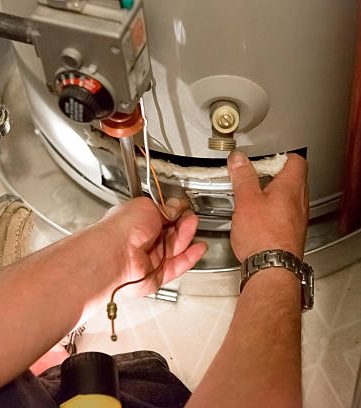
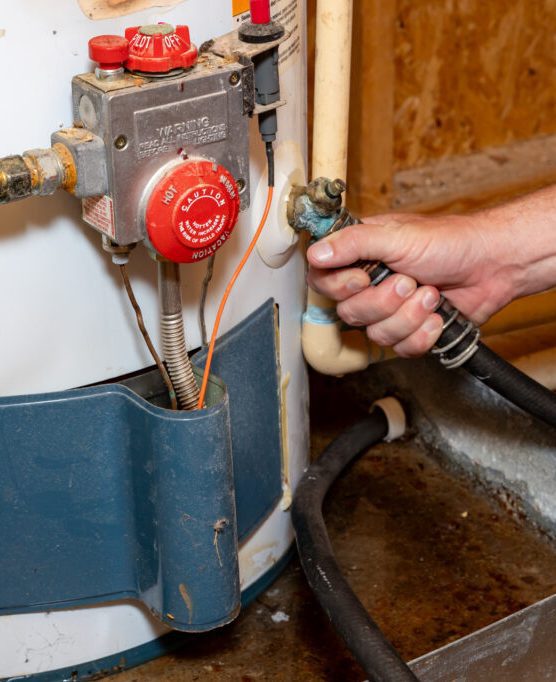
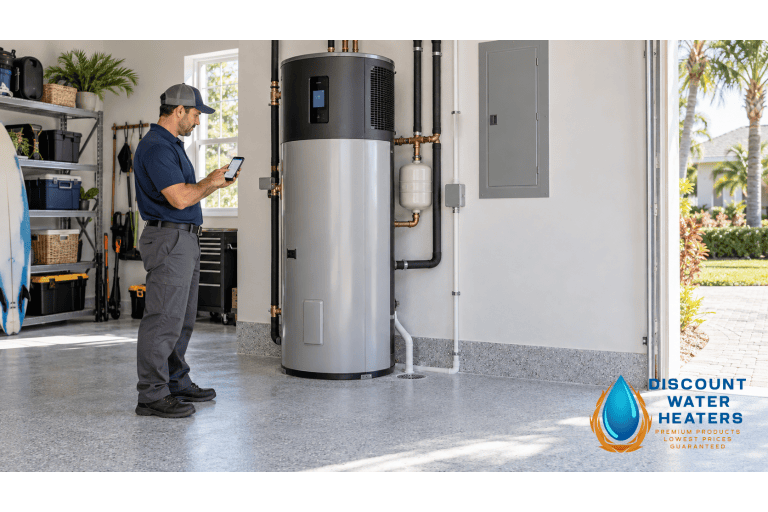
Help us serve you better by uploading a photo of your current water heater. While optional, a clear photo helps us confirm the unit and provide a more accurate, efficient installation.
02
Step 2
See Your Price Online
Start by sharing your contact details and answering a few quick questions about your setup. We’ll review everything and send you a transparent, no-obligation quote with no hidden fees or surprises.
03
Step 3
Shop Water Heaters
Choose the time that works best for you and we’ll handle the rest. Our expert technicians will make sure your new water heater is installed quickly, professionally, and with minimal disruption.
At Discount Water Heaters, we offer a simple, fast way for homeowners to repair or replace their water heaters with premium products at the lowest prices. With upfront transparent pricing, we eliminate extra visits and long waits for quotes to deliver affordable water heating solutions
When it’s time for a new water heater, we make the process easy and affordable, offering high-quality units installed quickly by our expert technicians.
We started Discount Water Heaters because getting an honest water heater price shouldn’t require a high-pressure sales visit. We serve the Treasure Coast with one goal: get your hot water back quickly, professionally and at a fair, upfront price.
Our Mission
Mission: To become the leading provider of affordable, premium water heater solutions.
Transparency: Committed to offering clear, upfront pricing with no hidden costs.
Value: Delivering unbeatable quality and value to every customer.
Customer Focus: Ensuring each customer receives the best in water heating solutions.
We are located in Fort Pierce and proudly serve the entire Treasure Coast of Florida. If you need a quick water heater replacement or same-day service, we’re here to help. With a focus on fast, friendly, and reliable service, we make sure your home enjoys reliable water heating solutions.
Head To Our Services Page And See How We can help your home today!
Why We’re the Best Choice for All Your Water Heater Needs
We specialize in 24/7 repairs and replacements of residential and light commercial water heaters. Our singular focus allows us to deliver unmatched expertise and service with a guarantee on premium quality at the lowest possible prices.*
Trusted Products
We install Rheem, Bradford White, A.O. Smith and other leading water-heater brands.
Guaranteed Lowest Price
Find a lower written quote from a licensed competitor for comparable equipment and installation, and we’ll beat it by $100.
Strong Warranty Protection
Every installation includes at least a one-year labor warranty. Most water heaters include a manufacturer tank warranty of six years or longer.
No Sales Pressure
Get clear options and upfront pricing without dealing with a commissioned salesperson.
Our customers love how easy and stress-free the process is. From quick installations to reliable service, read their stories to see how we've made a difference in their homes.
“I uploaded a pic of my busted water heater at 11PM and got a text back the next morning with a quote and install time. No phone calls, no hassle. Easiest home repair I’ve ever done.”
“Didn’t even have to pick up the phone. Sent a picture, got a quote, booked a time from my couch. They showed up exactly when they said and had hot water back in two hours.”
“Wasn’t sure what was wrong so I just snapped a photo and sent it in. They replied super fast, came out the same day, and fixed it without trying to upsell me. Honest, fast, and affordable.”
The right system depends on the home Rebates and tax credits can reduce the net cost of some water-heater upgrades, but programs change and eligibility depends on dates, product specifications, location, income rules, installation, and tax circumsta…
The future is about fit not one winning technology Water heating is changing. Homeowners can choose from familiar storage tanks, tankless systems, heat pump water heaters, connected controls, recirculation options, and increasingly detailed efficien…
A water heater is a system, not just a tank A replacement can look simple because the new appliance resembles the old one. In reality, the installation must coordinate water, pressure, temperature, fuel or electricity, combustion, venting, drainage,…